Ordering weed from a phone is now a normal part of legal cannabis retail, but the app landscape has changed fast. Several well-known names have closed, merged, or were never delivery apps at all. This guide ranks the top marijuana delivery apps and platforms. The facts were checked in September 2026. Each entry explains how the app works. Legal rules are covered too, along with what to look for in an on-demand weed delivery app.
See Quick takeaways
- Sales are flat in dollars, but online and delivery orders are still growing.
- The list mixes shopper apps with cannabis delivery software, because both are needed to complete a delivery.
- Some apps in older top-10 lists are social or strain-advice tools, not delivery services.
- Delivery is legal only where state law allows it, and federal rules changed in 2026.
Launch Your Own On-Demand Delivery App
Build a feature-rich delivery app with seamless ordering, tracking, payments, and more.
Weed Delivery Market Snapshot for 2026
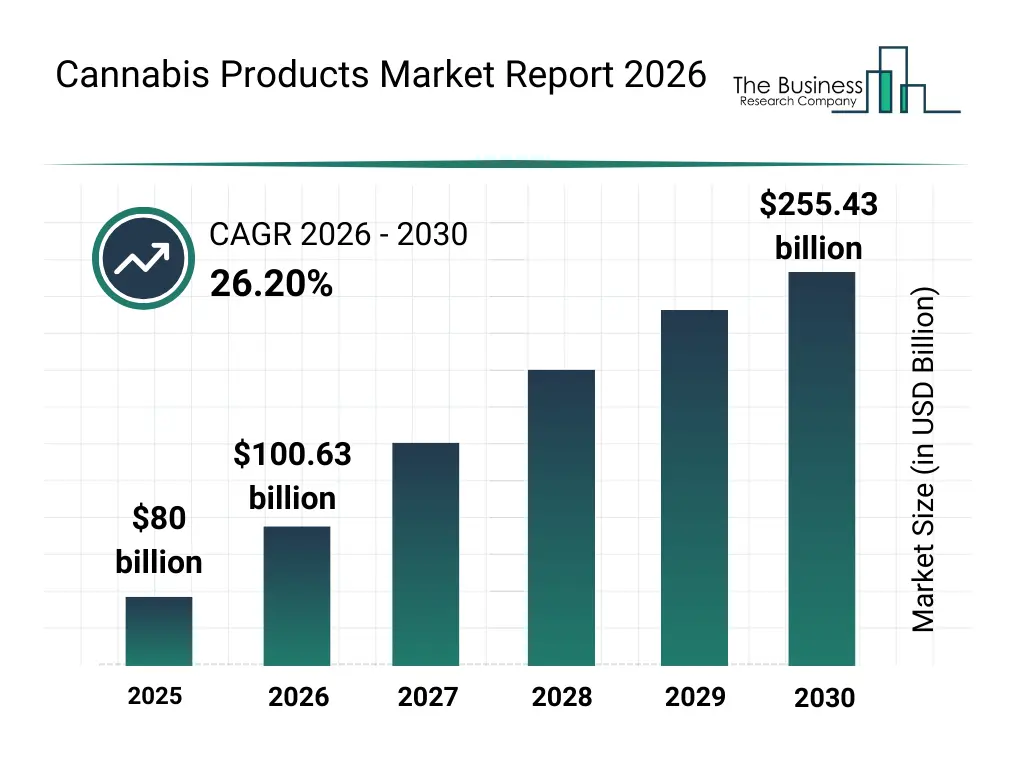
The U.S. market has stopped growing quickly, so the numbers need careful reading:
- BDSA reported $31.5 billion in regulated U.S. sales for 2025, made up of $23.9 billion adult-use and $7.6 billion medical.
- Whitney Economics measured 2025 lower, at $29.1 billion, which is the first yearly decline since adult-use sales began. It forecasts $30.5 billion for 2026. The firms differ because each measures the market in its own way.
- Anderson Economic Group reported on September 25, 2026 that sales plateaued in 2025 at about $6.5 billion per quarter.
- Headset data for the 12 months to June 2026 showed unit sales up 5.5% while dollar sales rose only 0.8%. Shoppers are buying more items at lower prices.
Online ordering is where growth is easier to see:
- Headset found that about 25% of dispensary sales are now placed online, including delivery and curbside pickup.
- Flowhub reported an average online order of $68.01, against $50.56 for walk-ins, which is about 35% higher.
- 67% of shoppers said delivery options are essential, according to survey data reported by Cova.
Delivery brands are also being consolidated. Vireo Growth closed its purchase of Eaze on April 1, 2026. The all-stock deal was worth about $47 million.
How the Top 10 Were Chosen
Weed delivery apps were checked against four points. The app must be active in 2026. It must support delivery or delivery operations. It must work with licensed sellers. Its claims must also be traceable to a public source. Apps built only for social sharing or strain advice were left out. Store ratings were also left out, because they change often and differ by country.
Shoppers and businesses need different tools, so the list has two groups. Ranks 1 to 6 are apps for shoppers. Ranks 7 to 10 are cannabis delivery software for retailers.
Top Weed Delivery Apps: A Quick Comparison
| # | Name | Type | Best for |
|---|---|---|---|
| 1 | Weedmaps | Listing marketplace | Comparing many local stores and deals |
| 2 | Leafly | Marketplace and strain guide | Strain research plus pickup or delivery ordering |
| 3 | Eaze | Retailer and delivery platform | Delivery in California, plus retail in Colorado and Florida |
| 4 | Jane | Online ordering marketplace | Live menus and rewards for shoppers |
| 5 | Dutchie | E-commerce, POS, and payments | Dispensaries that sell online at scale |
| 6 | Nugg | California delivery marketplace | Ordering from nearby California dispensaries |
| 7 | Onfleet | Delivery software | Routing, driver app, and proof of delivery |
| 8 | WebJoint | Delivery software | Compliance-focused delivery in California |
| 9 | Meadow | POS with delivery tools | Hub-and-spoke and dynamic delivery models |
| 10 | IndicaOnline | All-in-one software | Retailers wanting POS, delivery, and distribution together |
Top 10 Weed Delivery Apps and Platforms Reviewed
1. Weedmaps
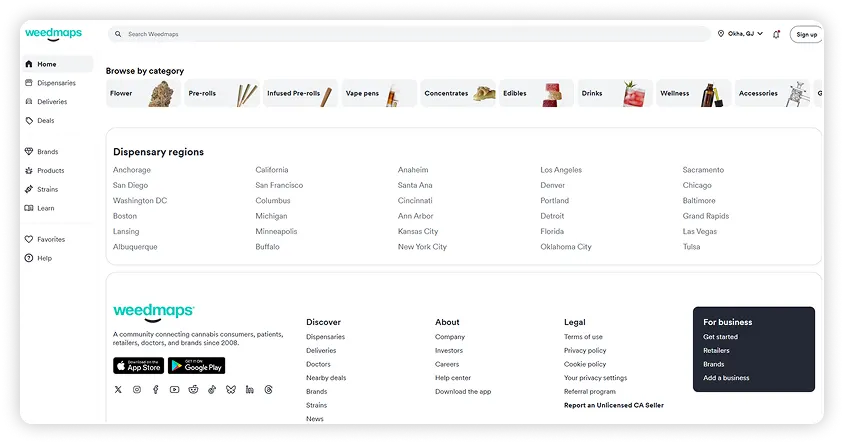
Weedmaps is the best-known listing marketplace in legal cannabis. It was founded in 2008 and shows dispensaries, delivery services, menus, and deals in one place. Pickup and delivery orders can be handled through its business tools, such as WM Orders and WM Dispatch. Federal rules stop the company from processing cannabis payments. Its revenue comes from subscriptions, featured listings, and deal listings.
Best for: shoppers who want to compare many local stores.
Keep in mind: it is a marketplace, so delivery fees, speed, and coverage are set by each listed retailer.
2. Leafly
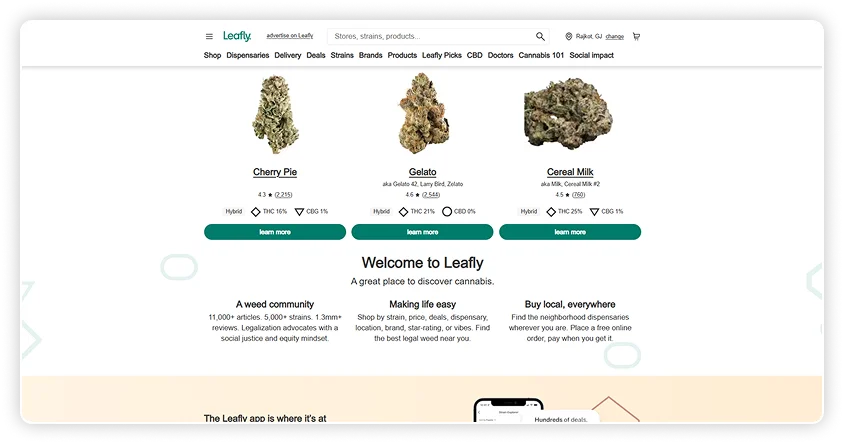
Leafly began as a strain and dispensary guide and now works as a marketplace as well. Its shop page lets results be filtered by pickup, delivery, and direct shipping. In the first quarter of 2026, the company added a menu and order integration for Bud Mart retailers. Some Google Play reviewers report a problem. A store can be shown for their address even when it does not deliver there. Delivery range should be confirmed before checkout.
Best for: strain research and store comparison.
Keep in mind: delivery is offered only by participating retailers in delivery-legal areas.
3. Eaze
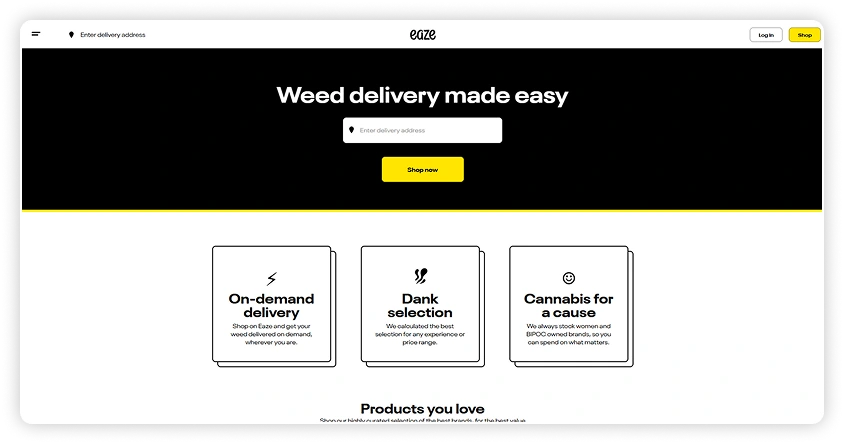
Eaze, once called the "Uber of weed," is now owned by Vireo Growth. When the deal closed on April 1, 2026, Eaze had completed more than 12 million deliveries. In California, it operates four combined retail and delivery sites and eight delivery-only sites. It also has 15 stores in Colorado and 40 in Florida.
Best for: California shoppers who want a delivery-first brand.
Keep in mind: Eaze went through a restructuring before the sale, so service areas should be checked in the app.
4. Jane
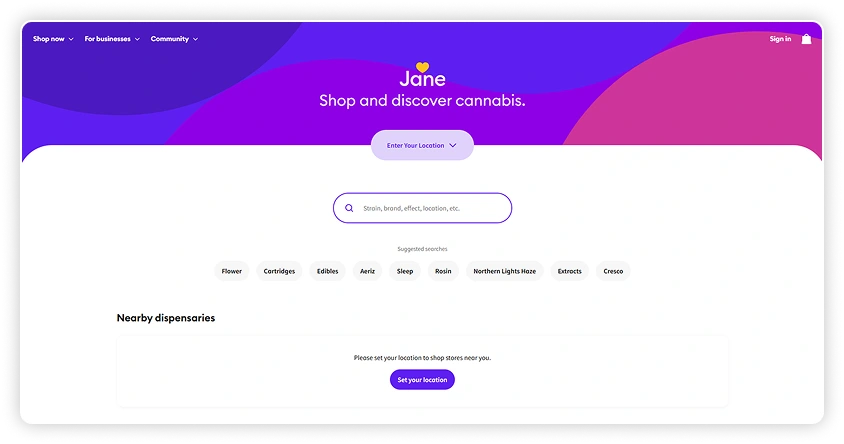
Jane Technologies was founded in 2015. It describes its platform as a ready-to-use e-commerce system for dispensaries and brands. The company says it powers more than 2,500 dispensaries and brands. Its iOS shopping app launched in October 2022. Its Jane Gold rewards program has paid shoppers more than $1 million in cash back. Jane also launched its own point-of-sale product in 2024.
Best for: shoppers who want live inventory, and retailers who want online ordering on their own website.
Keep in mind: delivery itself is carried out by the retailer, not by Jane.
5. Dutchie
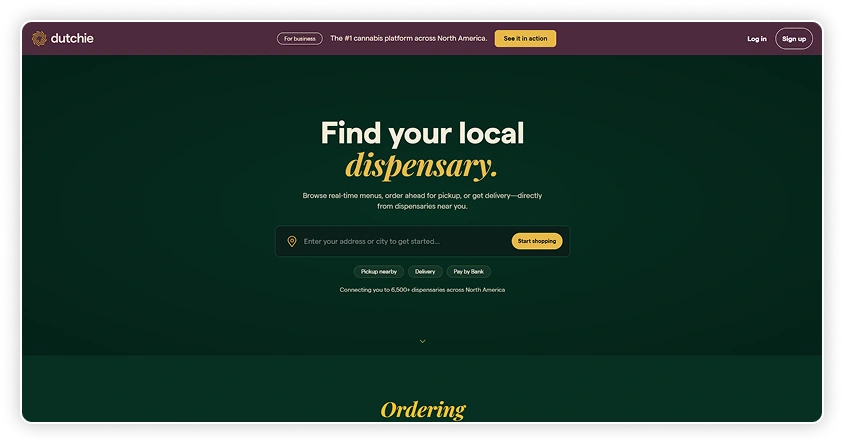
Dutchie offers online ordering, point-of-sale, and payments in one platform for cannabis retailers. IndicaOnline's 2026 roundup says Dutchie processes more than $22 billion in annual cannabis sales. It also says full plans can reach $1,000 per month per location. Those figures come from that roundup and were not independently confirmed.
Best for: dispensaries with strong online sales.
Keep in mind: it suits stores with online sales better than delivery-only operators, according to the same roundup.
6. Nugg
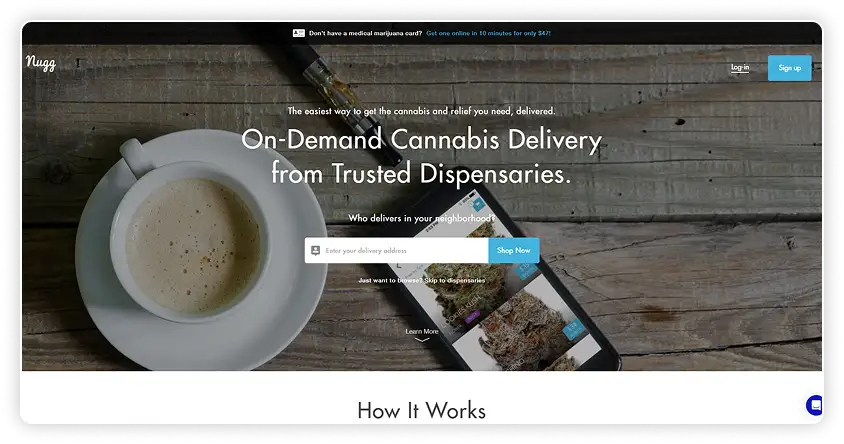
Nugg is a California marketplace that connects customers with nearby dispensaries. A July 2026 check by a coupon site listed it as active. Coverage varies by ZIP code, so it should be confirmed at checkout.
Best for: ordering from local California dispensaries.
Keep in mind: only limited independent information was found, so its details should be verified before use.
7. Onfleet
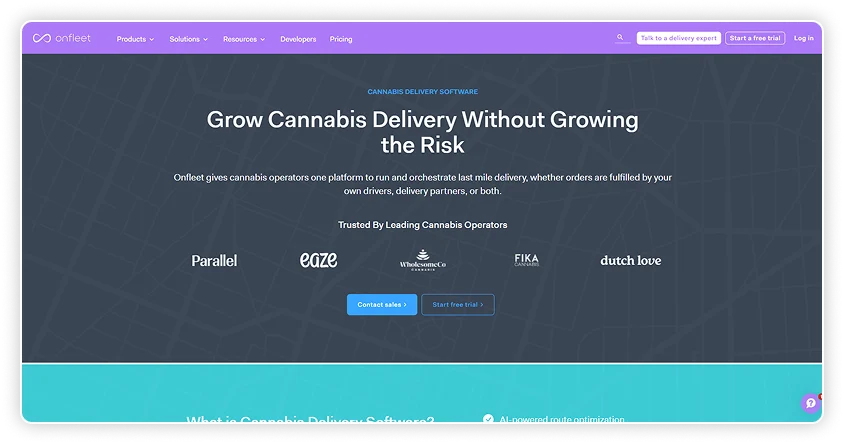
Onfleet is a last-mile delivery platform used by many business types, including cannabis. Its cannabis tools include route planning and live driver tracking. Proof of delivery is also built in, with ID checks, signatures, photos, and barcode scans. It connects with Dutchie, Meadow, and Jane. Onfleet's own page, updated in January 2026, lists an iOS driver rating of 4.8 from 4,489 ratings and G2 and Capterra ratings of 4.6. These are vendor-published numbers.
Best for: teams that need cannabis delivery software with strong routing for dense, multi-stop days.
Keep in mind: it was not built only for cannabis, so a cannabis POS is still needed for tracking rules.
8. WebJoint
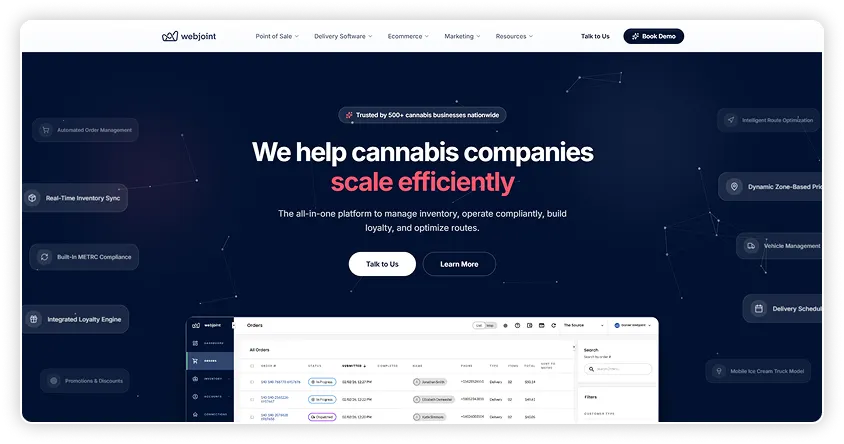
WebJoint focuses on cannabis delivery, e-commerce, and compliance. Its tools include a driver app, driver kits, and QR codes that keep vehicle inventory accurate. IndicaOnline's roundup says more than $244 million in orders have been processed on the platform.
Best for: California operators with predictable routes and strict compliance needs.
Keep in mind: Onfleet's comparison describes its routing as lighter than courier-first tools, so larger teams may outgrow it.
9. Meadow
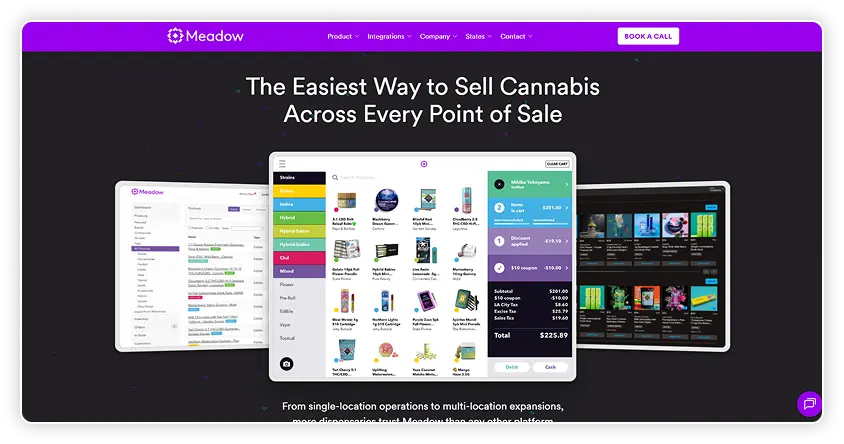
Meadow began as a delivery app and is now a point-of-sale system with built-in delivery software. It supports hub-and-spoke delivery and a dynamic "ice cream truck" model. It also connects with Metrc. In California, a Metrc delivery ledger must be created before a vehicle leaves the licensed premises. A two-way Onfleet integration handles routing and driver tracking. Meadow's older consumer app is no longer active, so it is best treated as retailer software.
Best for: dispensaries that want POS and cannabis delivery software in one system.
Keep in mind: it is aimed at businesses, not shoppers.
10. IndicaOnline
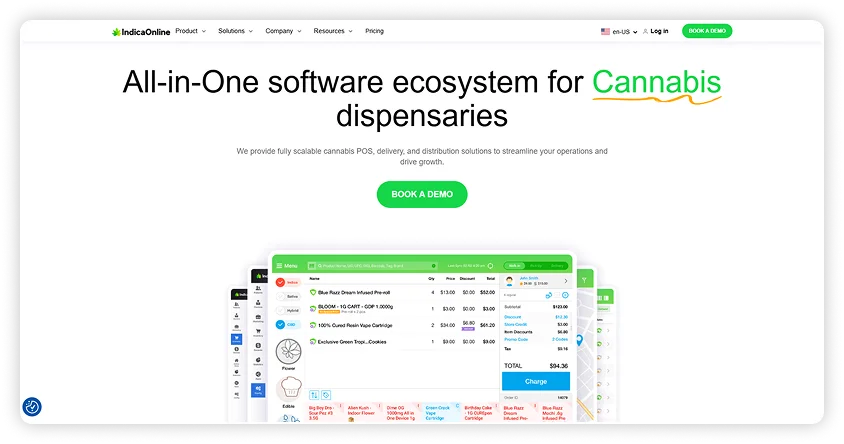
IndicaOnline sells all-in-one cannabis software covering point-of-sale, delivery, and distribution. Its delivery tools are described as covering live driver tracking and order management. Payments and built-in compliance checks are also included.
Best for: retailers who want one vendor for store and delivery operations.
Keep in mind: pricing and state coverage should be requested directly from the vendor.
Are Marijuana Delivery Apps Legal in 2026?
Marijuana delivery apps are legal only where state law allows cannabis delivery, and only when a licensed business fulfills the order.
State rules
A February 2025 review by the American Public Health Association found that 29 states allow some form of direct delivery. Of these, 14 allow adult-use delivery. Age checks at the door and product tracking are required in most of them. Because laws change often, current state rules should be checked before ordering or launching.
Federal marijuana rules
- In April 2026, a Justice Department order moved FDA-approved products into Schedule III. Marijuana sold under a qualifying state medical license was moved too.
- On September 9, 2026, the D.C. Circuit left that order in place.
- As of September 21, the DEA had not announced a final decision on broader rescheduling. Adult-use marijuana therefore remains in Schedule I.
Schedule III is not federal legalization. Delivery is still governed by state licenses.
Conclusion
Weed delivery apps are no longer a side feature of cannabis retail. Sales dollars are flat, yet online orders are larger and delivery is expected by many shoppers. Shoppers need an app that is active and legal in their area. Businesses need cannabis delivery software that fits their volume and compliance duties. Because state and federal rules are still moving, every choice should be checked against current law.
Looking for reliable cannabis delivery software that fits your business needs? Contact us today to explore secure, scalable, and compliance-focused cannabis delivery solutions designed to help your business grow.
Frequently Ask Questions

Viral Kacha - CEO & Sales Head
Author
With years of expertise in the on-demand app industry, Viral Kacha leads White Label Fox with a vision to empower startups and enterprises with top-tier, ready-made app solutions. His strategic approach, strong leadership, and deep market understanding drive business growth, innovation, and client success. He is dedicated to helping businesses scale efficiently with cutting-edge technology.