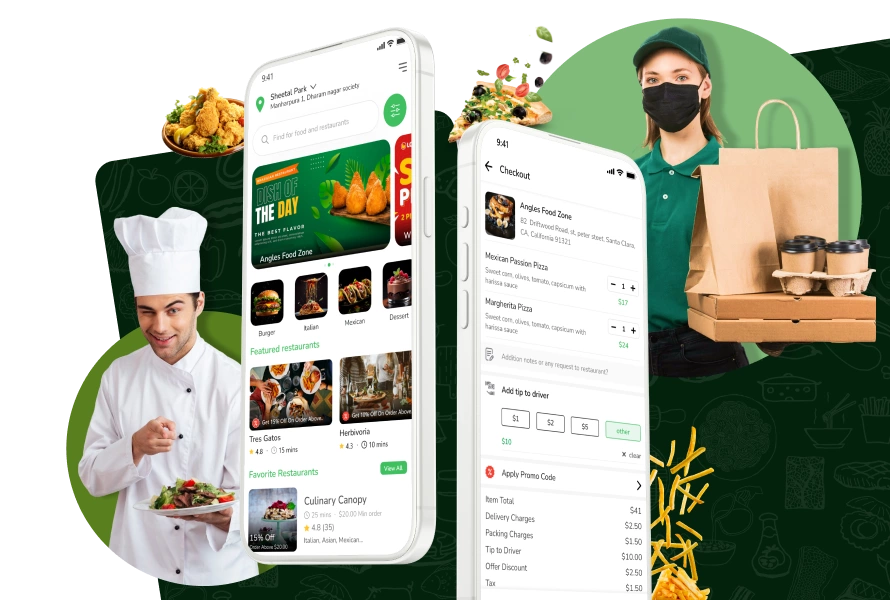
Startup founder, restaurant owner or delivery company, you can own your food delivery platform without a long custom build. Get a ready-made, white-label UberEats clone app under your brand and at a fraction of the usual cost.
An UberEats clone app is a ready-made food delivery platform that works the way UberEats does, but runs under your own brand. Customers browse nearby restaurants and place orders, restaurants accept and prepare them and delivery partners bring them to the door, all connected on one white-label delivery platform that you control.
Instead of building a food delivery app from scratch, you start with a proven white-label UberEats clone script and shape it for your market. You set your own commission, cities and payment methods, so you launch sooner, spend less and focus on signing restaurants and winning customers.
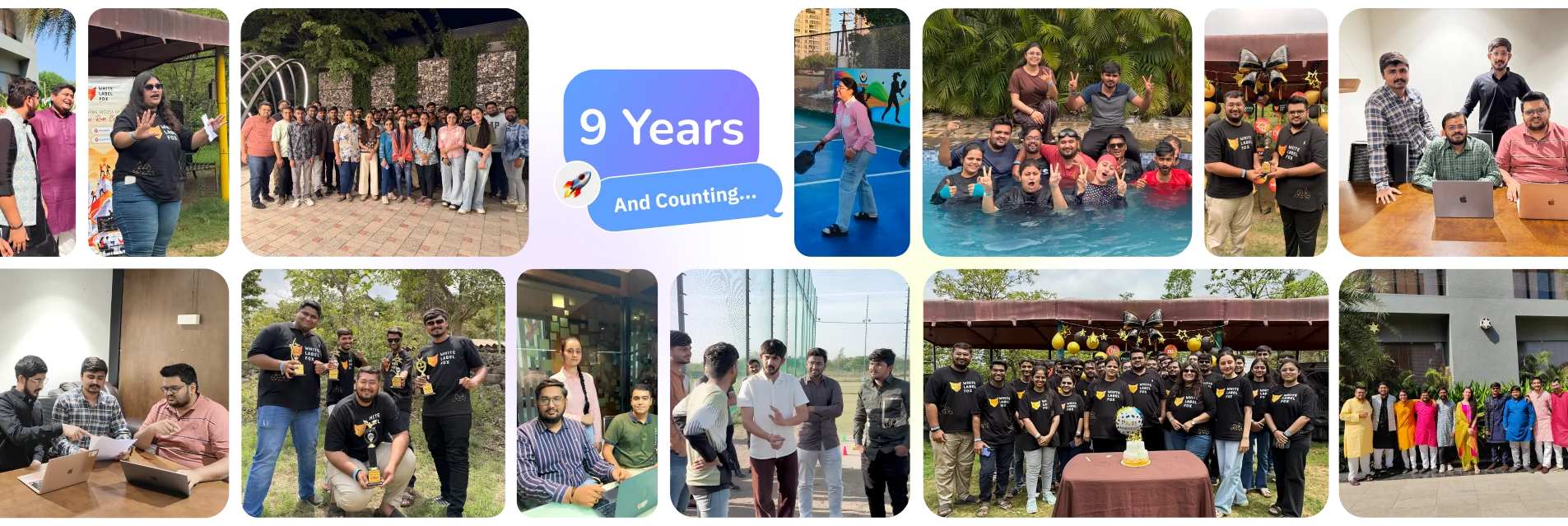
Every number here is earned, not claimed. For 9+ years, we've delivered white label solutions for startups and enterprises across 88 countries and every client owns their source code outright.
Whether you're starting a marketplace, taking a restaurant online or running a virtual kitchen, this ready-made UberEats clone script fits your model.
Bring multiple restaurants onto one platform and manage orders, deliveries and customers with ease.
For restaurant owners who want their own branded ordering app & a smoother way to handle orders and deliveries.
For virtual kitchens that want simple order handling, a quick delivery flow and real-time analytics to grow smarter.
A ready-made restaurant chain app that helps multi-outlet brands take online orders & manage deliveries.
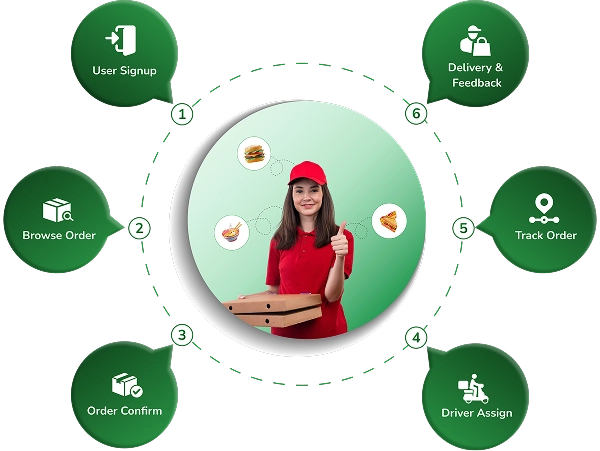
See how the ubereats clone app takes every order from signup to doorstep in six simple, smooth steps.
01
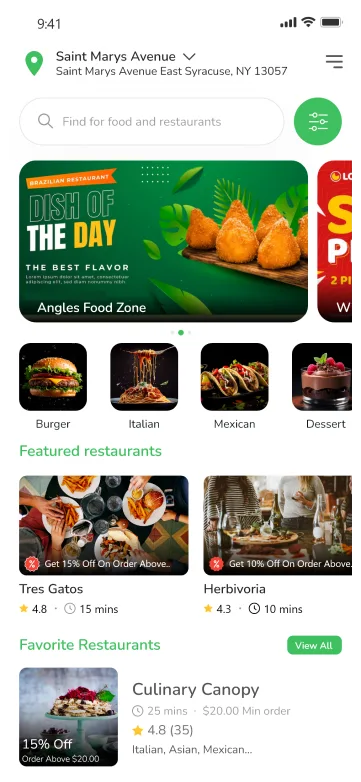
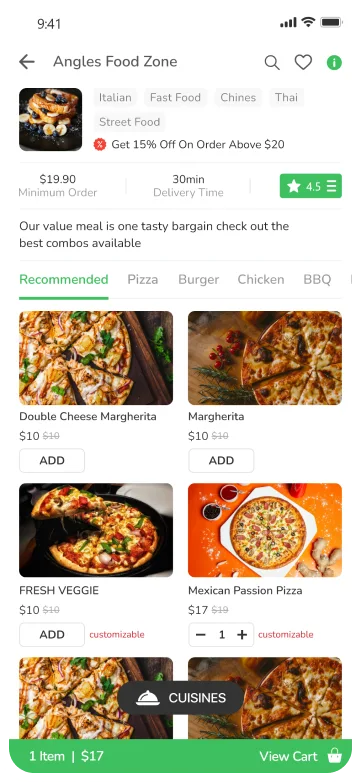
Customers sign up in seconds, save delivery addresses & instantly find restaurants near them.
02
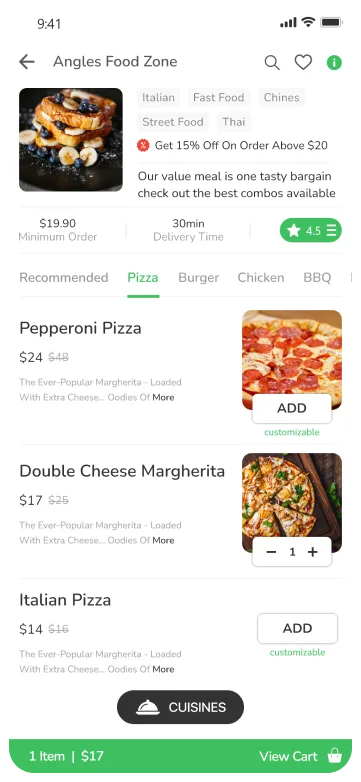
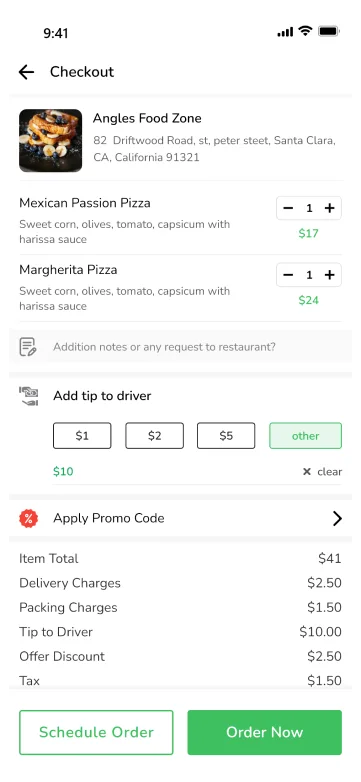
They browse menus, customize dishes & place orders with secure, convenient payment options.
03
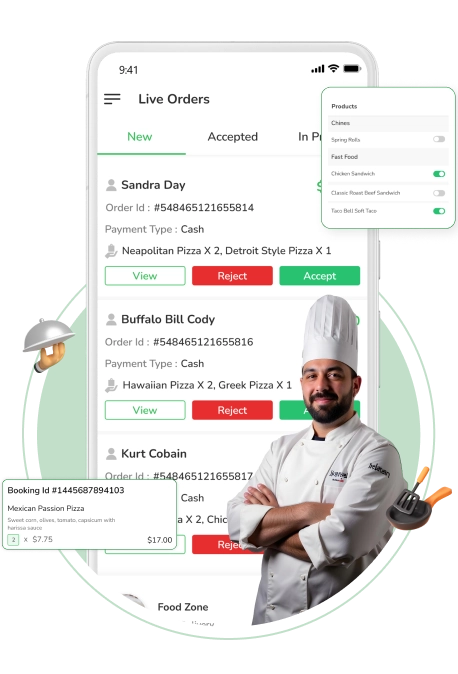
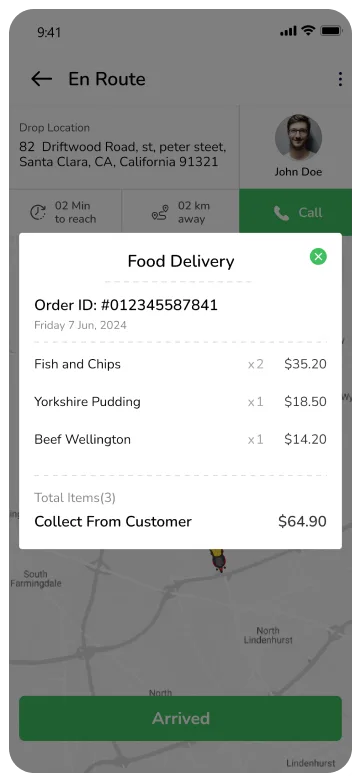
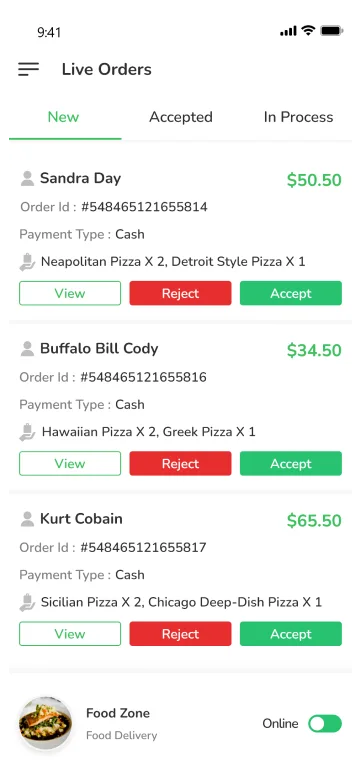
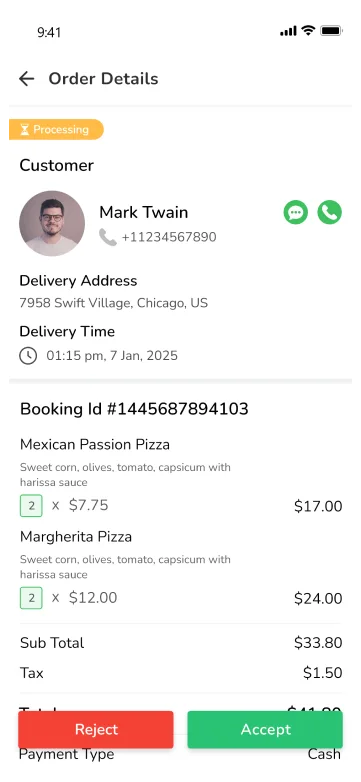
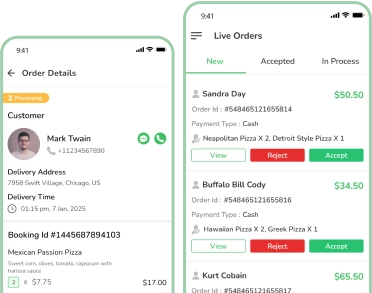
The restaurant gets an instant order alert, accepts it and starts preparing the meal.
04
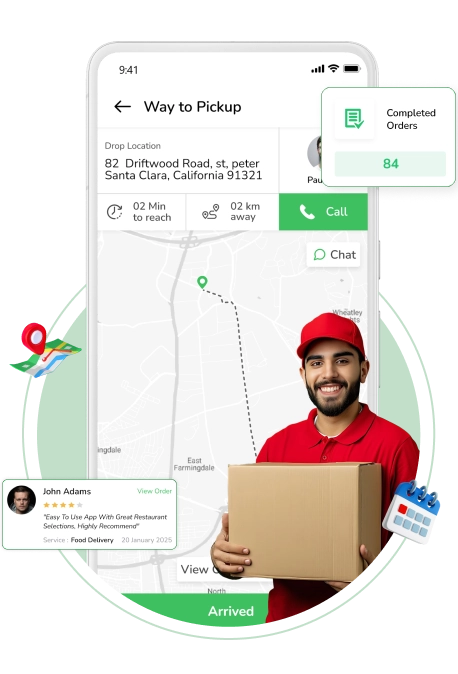
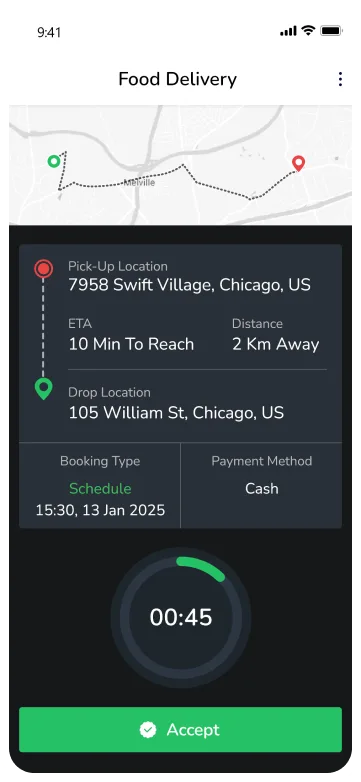
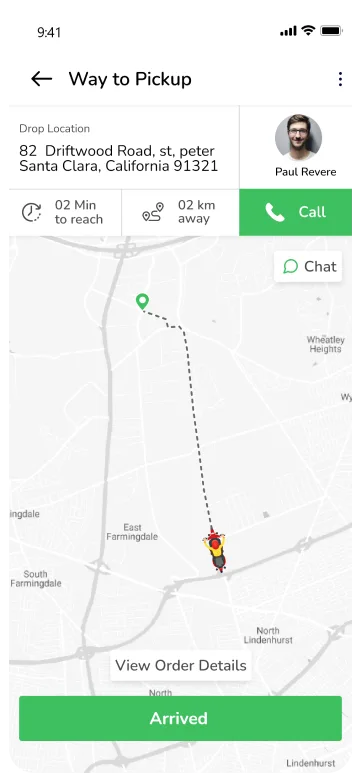
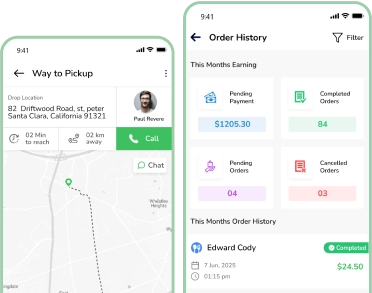
A nearby delivery partner is assigned and receives the pickup and drop-off details in the app.
05
Customers follow the order live on the map and get updates until it arrives.
06
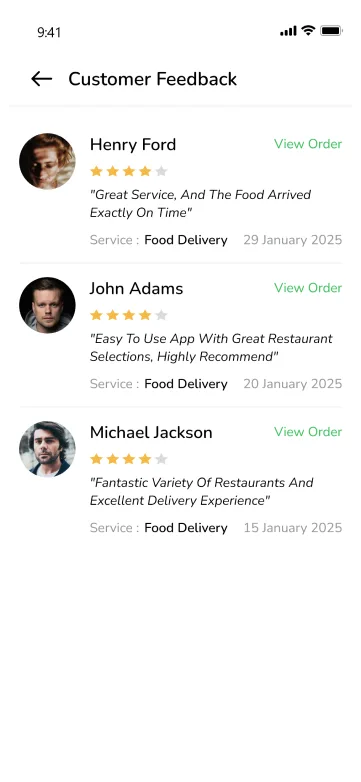
The meal reaches the doorstep, then customers and drivers rate each other.
Ready-made features for every app, so customers order easily, drivers deliver faster and restaurants stay in control.
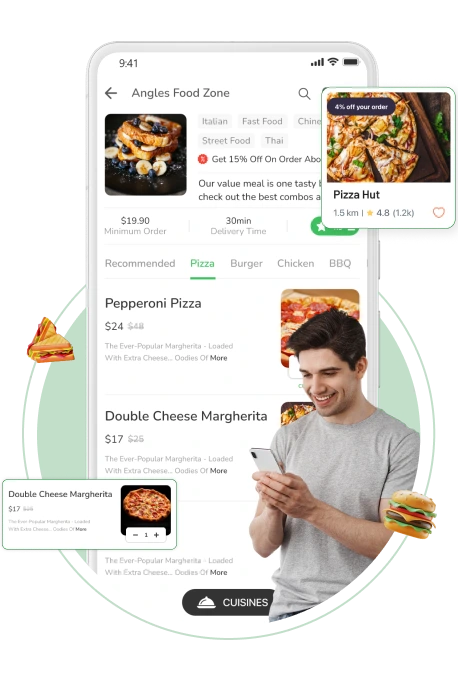
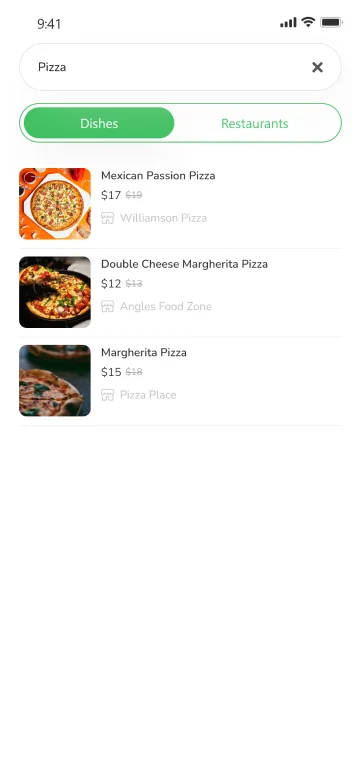
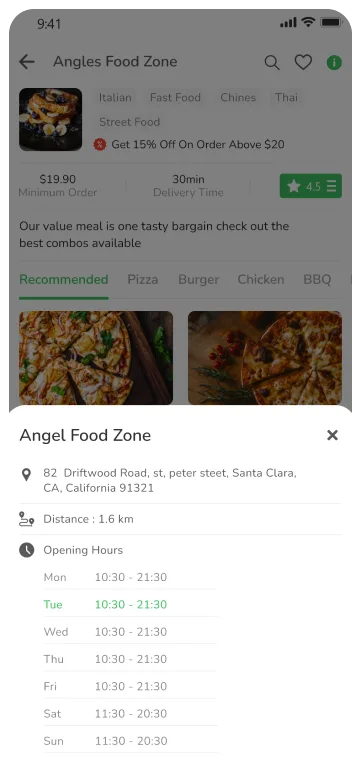
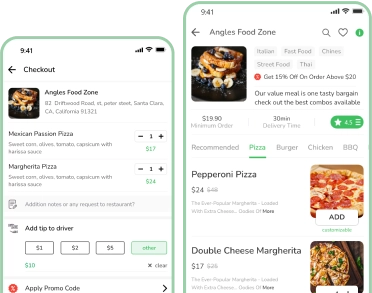
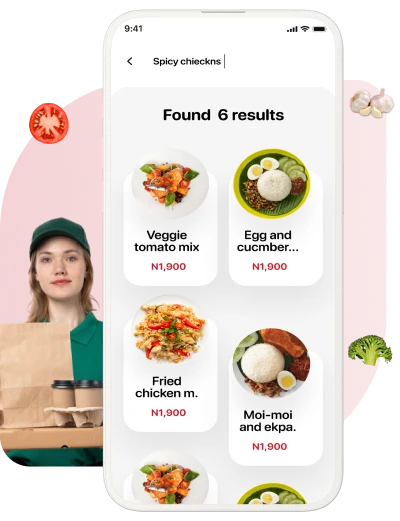
Search restaurants by name, cuisine, location or specialty dishes & find the perfect meal fast.
Filter and sort by ratings, price and delivery time to spot the best restaurants in seconds.
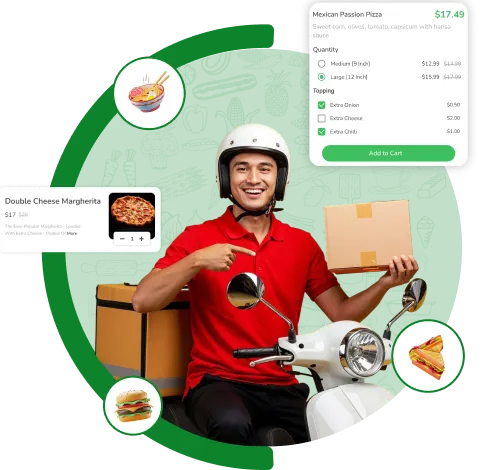
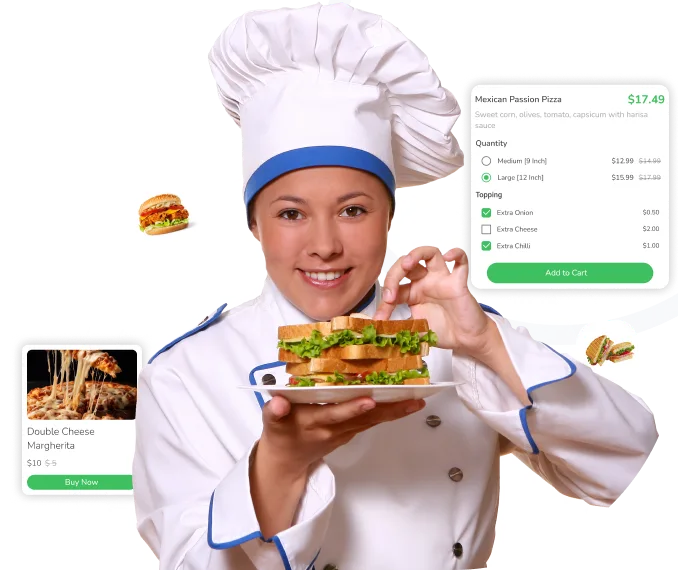
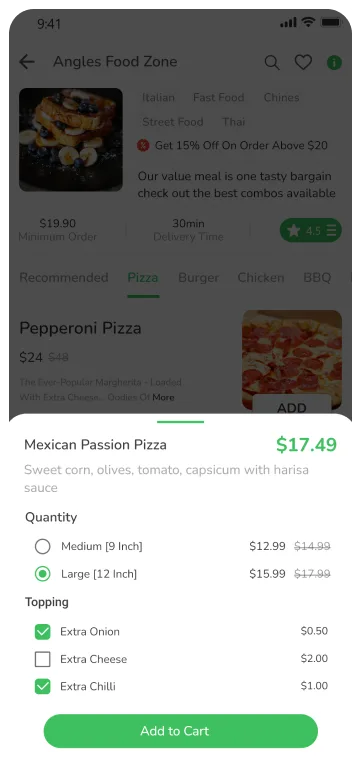
Personalize every order with toppings, sizes & special instructions for exactly the meal you want.
Pay securely with cards, wallets or a local payment gateway, whichever suits the customer best.
Top up a wallet balance & check out faster, without going through a payment gateway each time.
Apply promo codes and enjoy exclusive discounts and special deals on every order.
Invite friends and earn exciting rewards for every successful referral, with no extra effort.
Plan ahead and schedule orders for delivery at a date and time that suits the customer.
Sign up securely and verify documents to start receiving requests.
Review and accept or reject incoming delivery requests in real time, without any delays.
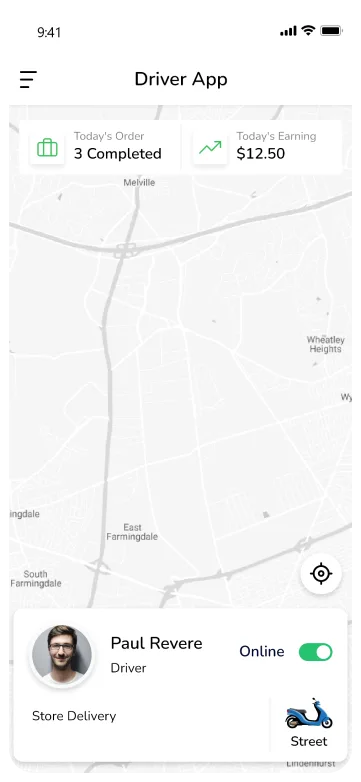
Switch availability on or off with one tap and accept deliveries only when ready.
See high-demand areas on a live map to plan smarter routes and boost overall earnings.
Update order progress from pickup to drop-off with clear real-time alerts.
Use Google Maps or Waze for turn-by-turn guidance and the best route on every delivery.
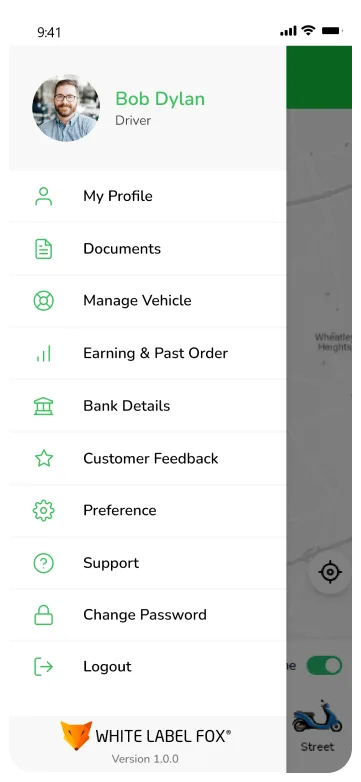
Upload and manage every required document for driver verification and compliance in one place.
Add and update vehicle details to keep operations smooth and deliveries accurate.
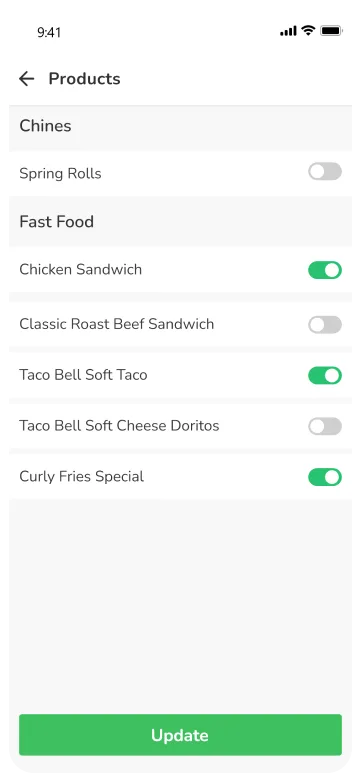
Accept or reject incoming orders based on product availability and stay in control of every request.
Update item availability instantly so customers always see accurate stock in real time.
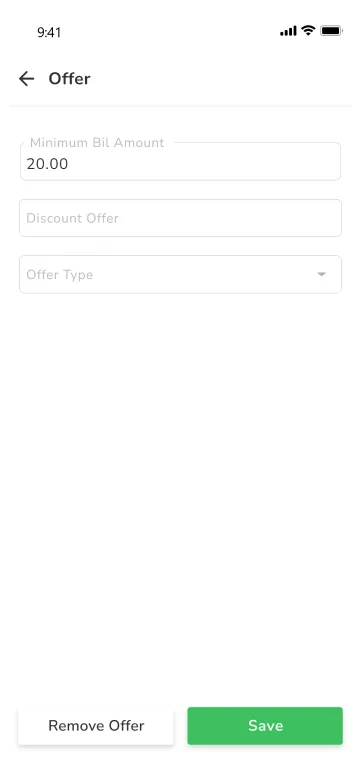
Set prices, manage offers and apply discounts to attract and retain customers, with full control.
Keep customers informed at every stage, from preparation to ready-for- pickup.
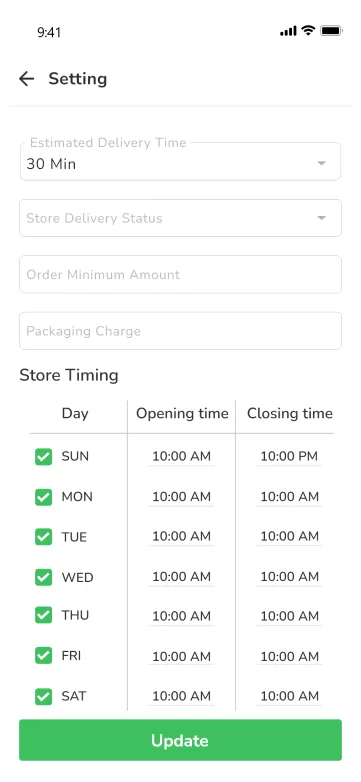
Set opening and closing hours so order acceptance runs smoothly without manual effort.
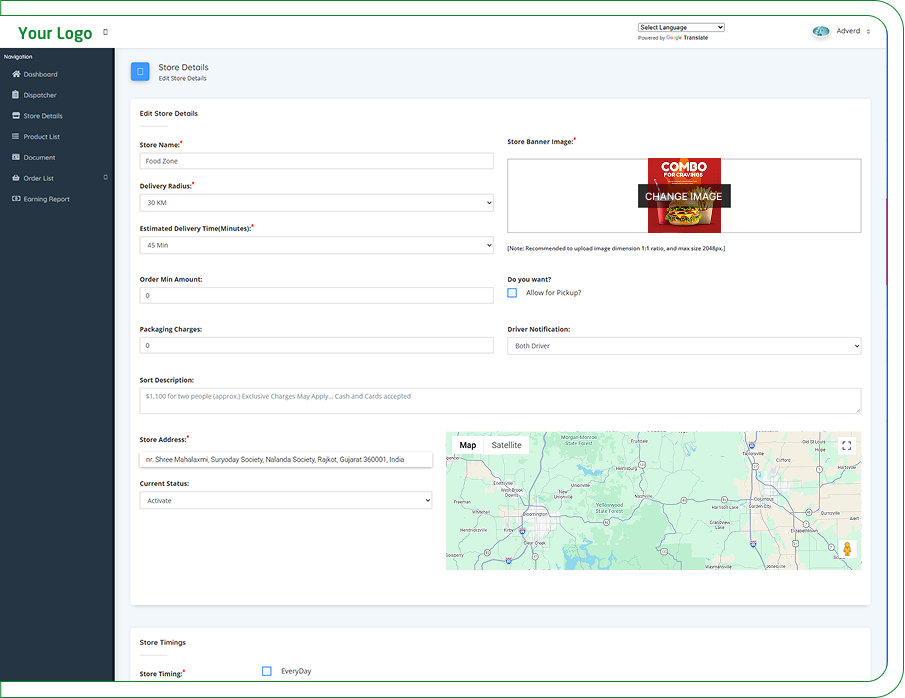
Define your delivery radius to optimize deliveries and reduce delays across service areas.
Create promotional campaigns and discount offers that boost sales and increase conversions.
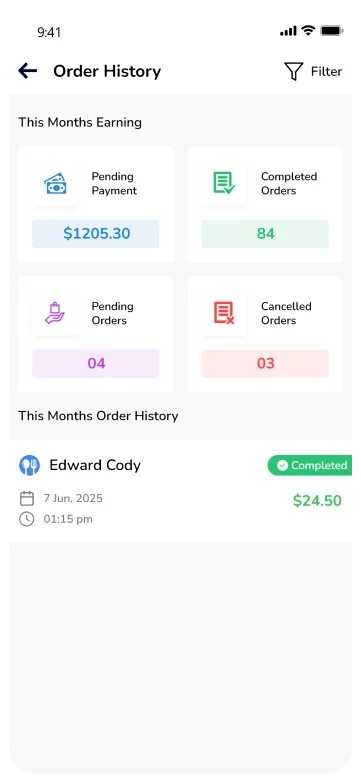
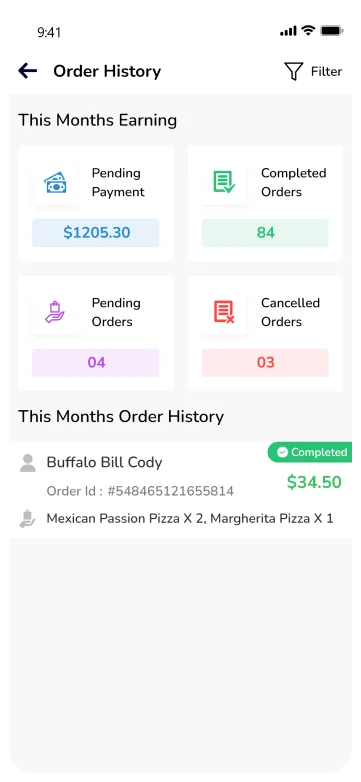
Access detailed records of completed and pending orders for analysis and tracking.
Get a live demo of the UberEats clone script and see how quickly you can go from idea to your first order.
Get Live Demo Now!
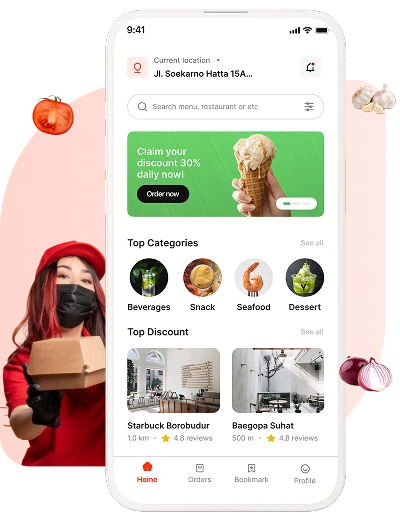
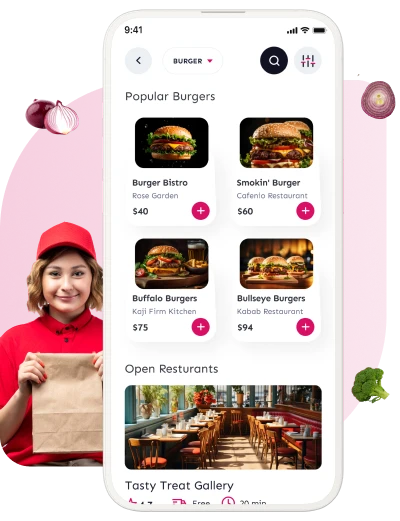
See how every screen of this white label food delivery app keeps ordering, payment and delivery smooth for users, drivers and stores.
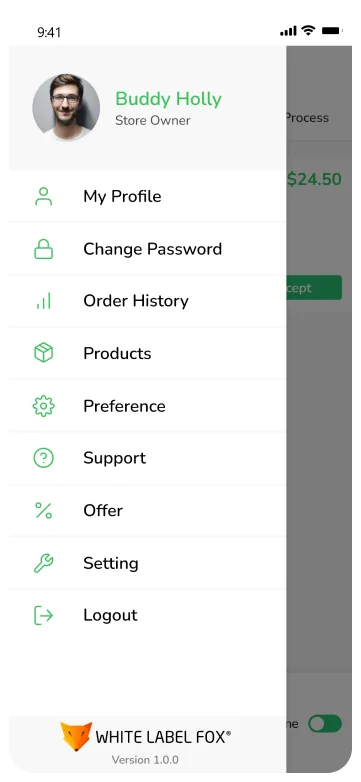
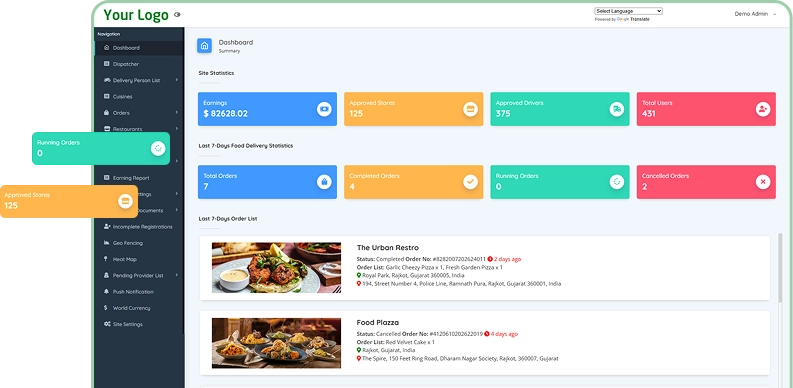
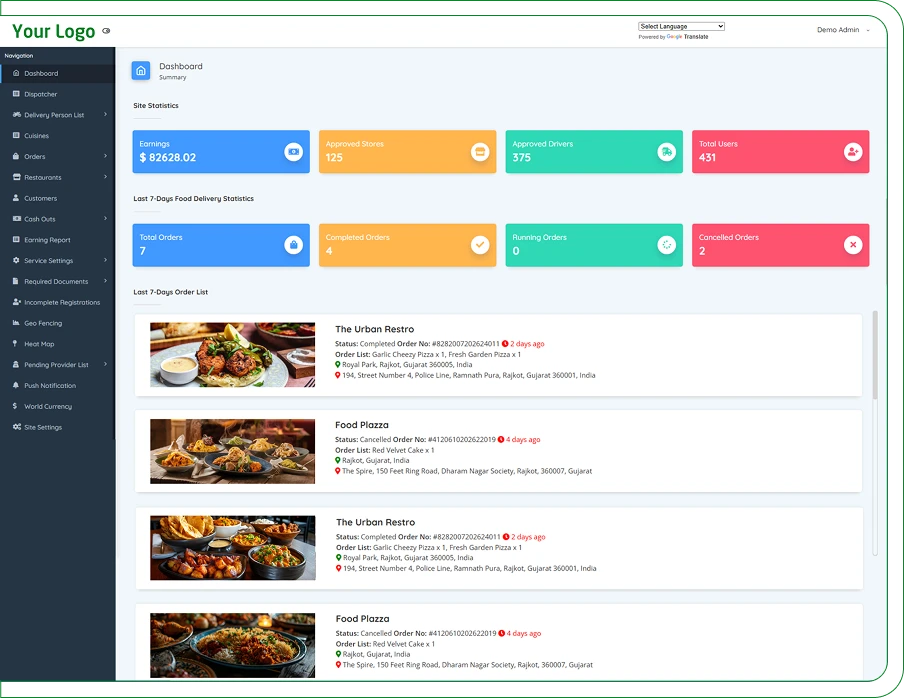
A powerful control dashboard for owners and a simple one for every restaurant, so your whole food delivery operation runs smoothly.
Assign different access levels to admins and staff to maintain business operations.
Manage all users from one place, including approvals, status updates and etc.
Manage restaurant menus and categories to maintain consistency and quality.
Track all orders in real time to ensure smooth processing & issue resolution.
Monitor earnings, commissions, & payouts with complete financial transparency.
Create and manage discount campaigns to drive orders and customer engagement.
Send real-time updates and announcements to users directly.
Access detailed business reports & export data for analysis & decision-making.
View today’s orders, revenue, and activity at a glance.
Accept, prepare, and update order status in real time.
Update restaurant information, address, and contact details easily.
Set opening and closing hours to control order availability.
Create, edit, or remove menu items, prices, and availability.
Upload and manage required business and compliance documents.
Access previous orders for tracking, review, and reference.
Monitor revenue and payouts through clear financial reports.
From ready-made mobile apps to powerful admin dashboards, every module is built to work together, so you can run your food delivery platform smoothly.
Customer Android App, Customer iOS App
Driver Android App, Driver iOS App
Store App, Restaurant/Store Web Dashboard
Control your whole food delivery business from powerful web dashboards, with dedicated access for owners, accounts, dispatchers and restaurants, plus a landing website to present your brand.
Suggests dishes based on taste and past orders to win repeat orders.
Predicts prep time so pickups run on schedule and ETAs stay reliable.
Turns order data into simple insights on top dishes and peak hours.
Adjusts delivery fees in busy hours to balance demand and driver supply.
Creates invoices and receipts automatically, cutting manual billing work.
Flags suspicious orders, fake accounts and odd payments before they cost you.
Share your requirements with us, and we'll guide you from setup to launch with a platform made for your business.
Talk to Our Experts
Get an uber eats clone backed by expert support, so you can launch with confidence and grow at your own pace.
Years of building food delivery platforms mean your UberEats clone app development follows a tested, reliable path.
Add your logo, colors and name and run the platform as your own brand with the full source code in your hands.
Customer, driver and store apps plus an admin dashboard come built in, so you can go live in as little as 5 days.
Add restaurants, users and orders as you grow, and the platform keeps running smoothly without slowing down.
A dedicated project manager guides your setup, and 1-year after-sales support keeps you covered after launch.
Publishing on Google Play and the Apple App Store is handled for you, so your apps go live ready for customers.
Choosing the wrong development partner doesn't just cost money it costs months of rebuilding, rebranding, and recovery. Here's how we stack up against every alternative, point by point, nothing hidden.
Take a look at real applications we’ve delivered to clients across different industries. Each project highlights practical solutions, custom features, and how businesses are running their operations using our platforms.
Two packages, two clear paths. Starter gets you a fast, minimum-viable launch to validate your
market.
Enterprise gives you full source code and everything needed to scale from day one.
| No | Service Included | Starter Package | Enterprise Package |
|---|---|---|---|
| 1 | Post-Launch Bug Support | 3 Months | 12 Months |
| 2 | App Store Upload & Submission |
|
|
| 3 | Full Source Code Delivery |
|
|
| 4 | App Store Listing Graphics |
|
|
| 5 | Social Login (Google / Facebook / Apple) |
|
|
| 6 | App Language Support | English Only | Up to 10 Languages |
| 7 | Currency Support | Single Currency | Up to 10 Currencies |
A smart mix of commissions, fees, ads and promotions helps your app like UberEats grow profits with every order.
Set your commission rate and earn a percentage from every order placed on your platform.
Collect a delivery fee from customers on every order, for quick and safe doorstep delivery.
Let restaurants pay to appear at the top of search results and reach more hungry customers.
Apply higher charges during peak hours to boost revenue when demand is at its highest.
Earn a small commission on each completed delivery from your network of drivers.
Show banner ads for brands and partner restaurants and turn app traffic into extra income.
We also provide ready clone scripts for apps like DoorDash, Zomato, and Foodpanda.
DoorDash is an on-demand food delivery service that connects users with local restaurants. It’s one of the largest food delivery platforms in the United States.
Zomato is an online food delivery service that allows users to order food from a wide range of restaurants and have it delivered to their doorstep.
FoodPanda is an online food delivery service that allows users to order food from a wide range of restaurants and have it delivered to their doorstep.
We are proud to be recognized by top industry platforms such as Trustpilot, Google, Clutch, and GoodFirms. With excellent ratings and reviews, our commitment to delivering high-quality, clone app development solutions is trusted by businesses and users worldwide.
We offer ready-made delivery clone scripts for grocery, medicine, courier, fuel, and more. Customise features and target your market with ease.
Grocery Delivery
Medicine Delivery
Flower Delivery
Courier Delivery
Meat Delivery
Fuel Delivery
Stationary Delivery
Alcohol Delivery
Hear from businesses that have worked with White Label Fox to build, customise, and launch their digital products. Their experiences offer a closer look at our collaboration, communication and delivery approach.
Check out our best-selling on-demand solutions and find the perfect fit for your unique business needs.
An Uber Eats clone app is a food delivery platform inspired by the Uber Eats business model. It connects customers with restaurants and delivery partners through digital ordering, payment processing and order tracking. Businesses can use a customizable clone solution to launch their own branded food delivery service.
An Uber Eats clone app allows customers to browse restaurants, explore menus, place orders and make payments. Restaurants receive and manage orders, while delivery partners handle pickups and deliveries. The admin dashboard helps the business operator manage users, restaurants, orders, commissions and platform activities.
An Uber Eats clone script is a software foundation used to build a food delivery platform with workflows similar to Uber Eats. Depending on the solution, it may include customer, restaurant, delivery partner and admin interfaces. Businesses can customize the available features and branding to suit their operational requirements.
A food delivery app connects customers, restaurants, delivery partners, and platform administrators. Customers place orders, restaurants prepare meals, and delivery partners transport them to the specified location. The platform coordinates order updates, payments, notifications and delivery tracking throughout the process.
A food delivery app should include restaurant listings, menu management, search and filters, secure payment options, order tracking, notifications, ratings and order history. Restaurant and delivery partner interfaces are also important for managing daily operations. An admin dashboard helps monitor transactions, commissions, users and platform performance.
A clone app starts with an existing software foundation modeled on a proven business workflow, which can reduce the work required to launch. Custom app development builds the solution around specific requirements from the beginning. The right choice depends on your launch timeline, customization needs, budget and long-term product strategy.
Yes, a food delivery clone app can be customized when the chosen solution supports the required changes. Businesses may adapt the branding, app interface, delivery workflows, payment integrations, commission rules, and service areas. Confirm source-code access and the provider's customization scope before choosing a solution.
Food delivery app source code contains the programming instructions used to build the application and its functionality. Depending on the package, it may cover customer, restaurant, delivery partner and admin modules, along with APIs and backend services. Confirm whether the source code, documentation, third-party integrations and deployment support are included in the specific agreement.
Uber Eats generates revenue through restaurant commissions, delivery and service fees, advertising, and subscription-related offerings. Its revenue model connects restaurant partnerships with customer ordering and delivery services. Businesses developing a similar platform can explore comparable revenue streams and adapt them to their local market and operating model.
The Uber Eats business model operates as a multi-sided marketplace connecting customers, restaurants, and delivery partners. Customers order meals, restaurants fulfill orders, and delivery partners transport them. The platform earns revenue through applicable commissions, fees, advertising and other services. A similar business can adapt this model based on local demand and operational requirements.
The profitability of a food delivery business depends on order volume, restaurant commissions, delivery expenses, customer acquisition costs, and operational efficiency. A business may improve its margins through repeat orders, efficient delivery management, and a suitable revenue model. However, profitability is not guaranteed and depends on market conditions and execution.
A food delivery app can generate revenue through restaurant commissions, customer service fees, delivery charges, sponsored listings, in-app advertising, and subscription plans. Some platforms also offer promotional services to restaurant partners. Businesses should select revenue streams that support sustainable operations without making the service unattractive to customers or restaurants.
The cost of food delivery app development depends on the solution type, required features, supported platforms, integrations, customization, and ongoing maintenance needs. A ready-made food delivery clone solution may reduce initial development work compared with building every component from scratch. Businesses should evaluate the complete scope, including deployment and support, before making a decision.
Several factors influence food delivery app development cost, including the number of app modules, custom features, payment gateway integrations, real-time tracking, third-party services, and scalability requirements. UI/UX customization, testing, deployment, and ongoing maintenance also affect the overall investment. Defining your business requirements early helps you evaluate solutions more effectively.
A food delivery startup can generate revenue through restaurant commissions, delivery fees, service charges, restaurant promotions, and subscription offerings. Startups can begin with a focused service area, build restaurant partnerships, and expand as demand grows. A clear revenue strategy and careful control of operating expenses are essential for building a sustainable business.
Investing in a food delivery app business can create revenue opportunities when there is sufficient customer demand, reliable restaurant supply, and efficient delivery operations. However, competition, logistics expenses, customer retention and market conditions can affect returns. Before investing, assess local demand, operating costs, differentiation opportunities and your expected path to profitability.
To build a food delivery app, first define your target market, business model, and service area. Next, select the required customer, restaurant, delivery partner and admin modules. Choose a development approach, integrate payments and tracking, test the complete ordering process and deploy the platform. A ready-made clone solution can provide a starting point for customization and launch.
Essential food delivery app features include restaurant discovery, menu browsing, cart management, secure payments, order scheduling, live order tracking, push notifications, ratings and order history. Restaurant tools should support menu updates and order management, while delivery partner tools should support delivery assignments and navigation. Admin controls help manage platform operations.
Food delivery app tracking typically uses GPS location data, mapping services and backend systems to display delivery progress. After an order is assigned, the customer can view available status updates and where supported, the delivery partner's location. Tracking accuracy depends on device permissions, connectivity, location updates and the mapping integration.
Food delivery apps can be developed using technologies such as Flutter or React Native for cross-platform interfaces, Swift or Kotlin for native mobile applications, and backend frameworks such as Node.js, Laravel, or Django. Databases, cloud infrastructure, mapping APIs, payment gateways and notification services support the wider platform. The appropriate stack depends on the solution's architecture and business requirements.
A typical multi-vendor food delivery business needs a customer app, a restaurant or vendor app, a delivery partner app, and an admin dashboard. The customer app manages ordering, the restaurant app handles incoming orders, and the delivery app supports pickups and deliveries. The admin dashboard coordinates users, transactions, commissions, and overall operations.
Restaurant and delivery partner apps coordinate the order fulfillment process through a shared backend. Restaurants receive orders and update preparation statuses, while delivery partners receive assignments and manage pickups and deliveries. The platform synchronizes relevant status changes so customers and administrators can follow order progress.
Scaling a food delivery app business requires a reliable technical foundation, efficient delivery operations, and a repeatable strategy for entering new markets. Businesses can expand restaurant partnerships, optimize delivery allocation, improve customer retention, and monitor operational performance. Cloud infrastructure, modular architecture and appropriate monitoring tools can support growth as demand increases.
Yes, a food delivery app can support both Android and iOS through native or cross-platform development. Cross-platform frameworks can help businesses maintain shared application functionality, while native development offers platform-specific implementation options. Confirm which operating systems, device versions, and app modules are included in the selected solution.
A white-label food delivery app is a ready-made or reusable software solution that businesses can customize and launch under their own brand. Depending on the provider, it may include customer, restaurant, delivery partner, and admin interfaces. This approach can help businesses establish a branded food delivery service without building every component from scratch.
A white-label food delivery app operates through interconnected applications and backend services that manage ordering, restaurants, deliveries, payments, and administration. The business configures supported branding and operational settings before launching the platform under its own name. The exact workflow and available capabilities depend on the provider's solution.
A white-label food delivery app can reduce initial development effort, accelerate time-to-market, and provide a foundation for launching a branded service. Businesses may also benefit from existing operational workflows and customizable features. The actual advantages depend on the software's quality, flexibility, source-code terms, integration options, and ongoing support.
To launch a food delivery app under your own brand, define your target market, select a suitable software solution, and customize the supported branding elements. Configure restaurant onboarding, delivery operations, payment methods, and service areas. Test the complete ordering journey before deployment, then launch in your selected market and improve the service using customer and operational feedback.
After launch, a food delivery app may require technical troubleshooting, bug fixes, security updates, performance monitoring, integration maintenance, and compatibility updates for supported devices. Businesses may also need help with deployment issues and operational configuration. Confirm the provider's support hours, response process, maintenance responsibilities, and service terms before launch.
Yes, a white-label food delivery app can be expanded to new cities if its architecture and configuration support multi-location operations. Expansion may involve setting service areas, onboarding local restaurants and delivery partners, configuring regional payment options, and adapting operational rules. Confirm the platform's scalability and location-management capabilities before planning a wider rollout.
Deploying a food delivery app typically involves configuring the production environment, setting up required integrations, testing payment and ordering workflows, preparing app store submissions, and verifying security and performance. The process may also include domain configuration, server setup, and administrator training. Exact deployment responsibilities depend on the software provider and agreed scope.
A food delivery app can be adapted for different markets through localization, currency settings, payment integrations, delivery zones, language options, and region-specific operational rules. Businesses may also adjust restaurant onboarding processes and customer communication to suit local preferences. Availability depends on the platform's supported configuration options and third-party service coverage.
We use modern, scalable, and secure technologies to develop high-performance mobile applications, web platforms, and backend systems. Our technology stack is carefully selected to ensure reliability, fast deployment, seamless integrations, and long-term scalability.
Google Maps
Laravel
CSS
MySQL
Flutter
PHP
Firebase
Bootstrap
100 MS
HTML
AWS
Dart
WhatsApp
+91 79849 31943
Write to us
[email protected]
Stay updated with the latest trends, insights, and tips in the on-demand app industry. Explore our newest blogs to gain valuable knowledge and ideas to grow your business!
300+
StartupsPowered
100% Ownership
Enterprise
GradeProduct
NDA
Protection