Electric scooter sharing is a service where you find, unlock and pay for a shared e-scooter through a mobile app, ride it for a short trip, and park it for the next rider. In 2026, the biggest names in this market are Lime, Dott (which now includes TIER), Voi, Bird, Spin, Bolt, Veo and Neuron Mobility (which now includes Beam).
The industry looks very different from 2023. Lime listed on Nasdaq in July 2026. Bird went through bankruptcy and now sits under a new parent company. Several well-known brands merged or shut down, and cities such as Paris, Madrid and Prague removed rental e-scooters altogether.
This guide covers the companies that operate today, where they run and how they charge, plus the brands that closed or merged. It also explains how scooter sharing works, how operators make money and what it takes to start your own scooter rental business.
The market is worth understanding because riders keep using it. North American riders took 85 million shared e-scooter trips in 2024, according to the North American Bikeshare & Scootershare Association (NABSA). Europe recorded a record 312 million e-scooter trips in 2025, according to Fluctuo's European Shared Mobility Index.
Key takeaways
- Lime is the largest scooter-sharing company by revenue and by number of countries. It reported $886.7 million in 2025 revenue across about 230 cities in 29 countries.
- Dott has the widest city footprint in Europe, with 400+ cities in 20 countries after its merger with TIER.
- Bird and Spin now belong to Third Lane Mobility, which bought Bird's assets out of bankruptcy in 2024.
- Superpedestrian (LINK), Scoot, Skip, Wind Mobility and Circ no longer operate. Lyft no longer runs its own dockless scooters.
- Operators have shifted from fast growth to profitability, longer-lasting vehicles, seated scooters and city tenders with fewer, licensed operators.
Electric Scooter Rental Companies at a Glance (2026)
This table compares the eight major e-scooter rental and sharing companies operating in September 2026. City and country counts come from each company's latest official figure, and the date of each figure is shown in the company profiles below.
| Company | Service | Key markets | Rental model | App | Current status |
|---|---|---|---|---|---|
| Lime | E-scooters, e-bikes, seated scooters | 230 cities, 29 countries (North America, Europe, Australia/NZ) | Dockless; unlock fee + per-minute, LimePass, LimePrime | Lime app; also bookable in the Uber app | Operating; public on Nasdaq (LIME) since July 2026 |
| Dott (incl. TIER) | E-scooters, e-bikes | 400+ cities, 20 countries (Europe, Middle East) | Pay-per-minute, Minute Passes | Dott app | Operating; merged with TIER in 2024 |
| Voi | E-scooters, e-bikes | 130+ towns and cities, 12 countries (Europe) | Pay-per-minute, Voi Pass | Voi app | Operating |
| Bird | E-scooters, e-bikes, seated scooters | 200+ cities (North America, Europe, Middle East) | Unlock fee + per-minute, Bird passes | Bird app; also bookable in the Lyft app (US) | Operating under Third Lane Mobility since 2024 |
| Spin | E-scooters, e-bikes | North America | Unlock fee + per-minute | Spin app | Operating under Third Lane Mobility |
| Bolt | E-scooters, e-bikes (plus ride-hailing, car-sharing) | Europe, plus launches such as Washington and Almaty | Pay-per-minute, unlimited-unlock plans, minute passes | Bolt app | Operating |
| Veo | Stand-up and seated scooters, e-bikes, e-trikes | 50+ US cities | Unlock fee + per-minute | Veo app | Operating; privately held |
| Neuron Mobility (incl. Beam) | E-scooters, e-bikes | About 100 cities across Asia-Pacific and other markets | Pay-per-minute, passes | Neuron and Beam apps | Operating; merged with Beam in September 2025 |
Prices and service areas change often, and they vary by city. Always check the operator's app for the live rate in your area.
What Are the Biggest Electric Scooter-Sharing Companies?
Lime is the biggest electric scooter-sharing company in the world by revenue and by number of countries served. "Biggest" depends on what you measure, though. Dott serves more cities, and Voi reports more rides than Dott. The table below compares the latest figures each company has published.
| Company | Revenue (latest full year) | Cities / countries | Rides | Fleet |
|---|---|---|---|---|
| Lime | $886.7M (2025) | 230 cities, 29 countries (Dec 2025) | About 19M riders (2025) | About 408,000 vehicles on average (Q2 2026) |
| Voi | EUR 178.2M (2025) | 130+ cities, 12 countries (Feb 2026) | 115M+ rides (2025) | 150,000+ vehicles |
| Dott | EUR 173.3M (2025) | 400+ cities, 20 countries (Mar 2026) | 76.9M rides (2025) | About 162,000 vehicles on average (2025) |
| Bird + Spin (Third Lane Mobility) | $204M gross bookings (2024) | 200+ cities (Jan 2026) | About 35M rides (2024) | About 180,000 vehicles (2024) |
Sources: Lime prospectus and Q2 2026 results; Voi FY2025 report; Dott FY2025 report; Third Lane Mobility 2024 results and January 2026 update.
These companies report different measures (riders vs rides, revenue vs gross bookings, average vs total fleet), so use the table as a guide rather than a strict ranking. Lime is also the only e-scooter operator in this list that is a public company, which means its figures come from audited filings.
Top Electric Scooter Rental & Sharing Companies in 2026
1. Lime
- Founded: 2017
- Headquarters: San Francisco, California, USA
- Key markets: About 230 cities in 29 countries across North America, Europe and Australia/New Zealand (December 2025). The US, UK and France are its three biggest markets by revenue.
- Services: Stand-up e-scooters, e-bikes and seated e-scooters (the LimeGlider)
- Business model: Dockless, pay-per-ride (unlock fee plus per-minute rate), with LimePass minute bundles and the LimePrime subscription
- App/platform: Lime app; Lime rides can also be booked inside the Uber app
- Current status: Operating; listed on Nasdaq under the ticker LIME since 1 July 2026
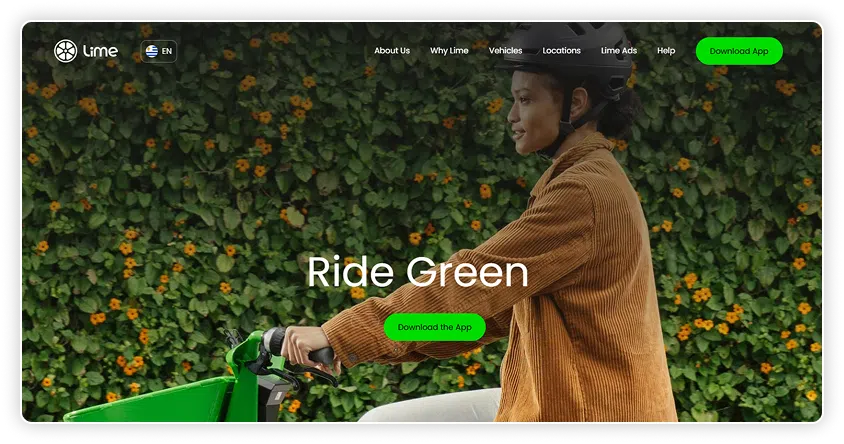
Lime is the largest shared e-scooter company in the world by revenue. Lime (legal name Neutron Holdings, Inc.) reported $886.7 million in revenue in 2025, up from $686.6 million in 2024, and about 19 million riders.
Lime is not yet profitable on a net (GAAP) basis: it reported a $59.3 million net loss for 2025. It is profitable on an adjusted EBITDA basis, with $218.1 million in 2025, and it generated positive free cash flow in both 2024 and 2025. Lime priced its IPO at $25 per share and started trading on 1 July 2026.
Uber is Lime's largest strategic partner. Uber led a $170 million investment in Lime in 2020 and handed its Jump bike and scooter business to Lime. Rides booked through the Uber app made up 14.3% of Lime's 2025 revenue. In 2025 Lime added two new vehicles: a redesigned e-bike and the seated LimeGlider. In 2026 it began testing Lime Vision, a camera-and-AI system that detects sidewalk riding, in Seattle. Lime also bought Neuron Mobility's Canadian operations in 2026.
2. Dott (now including TIER)
- Founded: 2018
- Headquarters: Amsterdam, Netherlands
- Key markets: 400+ cities in 20 countries across Europe and the Middle East (March 2026)
- Services: E-scooters and e-bikes
- Business model: Pay-per-minute rentals with Minute Passes (for example 30, 100 or 300 minutes, depending on the city)
- App/platform: Dott app (all former TIER vehicles moved into the Dott app)
- Current status: Operating
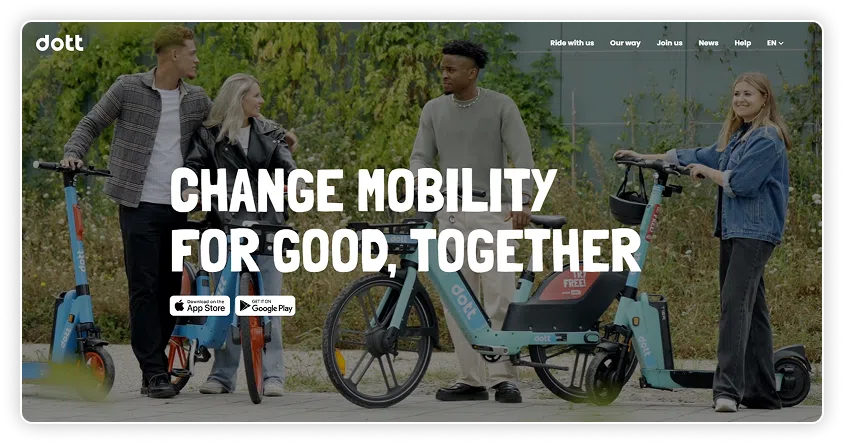
Dott is Europe's largest shared micromobility operator by city count. Dott and Germany's TIER Mobility merged in 2024, and on 1 October 2024 all TIER vehicles began moving to the Dott brand and app.
In 2025, Dott reported EUR 173.3 million in revenue, 76.9 million rides and its first positive adjusted EBITDA of EUR 7.2 million. The company has 12 million users and planned to add 45,000 new vehicles by mid-2026.
3. Voi
- Founded: 2018
- Headquarters: Stockholm, Sweden
- Key markets: 130+ towns and cities in 12 European countries, including the UK, Germany and the Nordic countries (February 2026)
- Services: E-scooters and e-bikes
- Business model: Pay-per-minute, with Voi Pass options (day, week or month) that remove the unlock fee
- App/platform: Voi app
- Current status: Operating
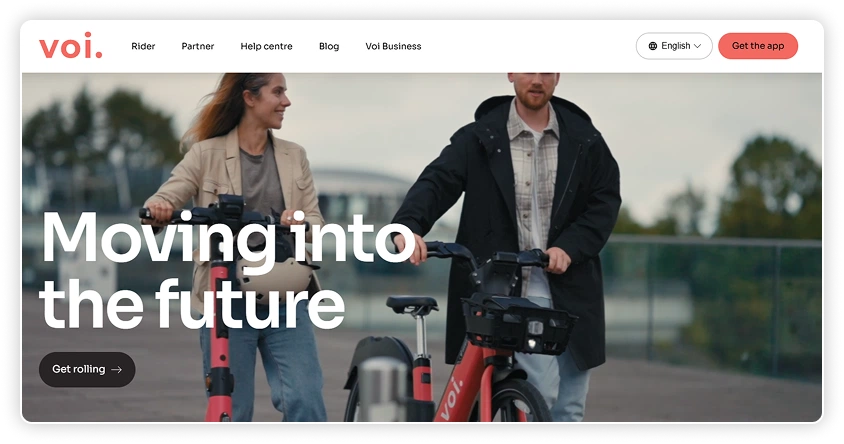
Voi is one of the fastest-growing scooter-sharing companies in Europe. Voi reported EUR 178.2 million in 2025 revenue (up 34%) and more than 115 million rides, with a fleet of more than 150,000 vehicles.
Voi posted a positive adjusted EBIT of EUR 3.2 million for 2025, though its reported EBIT was still negative (minus EUR 7.6 million). Voi is one of three operators, alongside Lime and Dott, running Paris's shared e-bike contract. Voi's CFO said in July 2026 that the company has no concrete IPO plans.
4. Bird
- Founded: 2017 (originally in Santa Monica, California)
- Headquarters: Owned by Third Lane Mobility
- Key markets: 200+ cities across North America, Europe and the Middle East (January 2026)
- Services: E-scooters, e-bikes and seated scooters
- Business model: Unlock fee plus per-minute rate, with ride passes and a reduced-fare Community Plan in some cities
- App/platform: Bird app; Bird scooters can also be booked in the Lyft app in 25+ US cities
- Current status: Operating under Third Lane Mobility
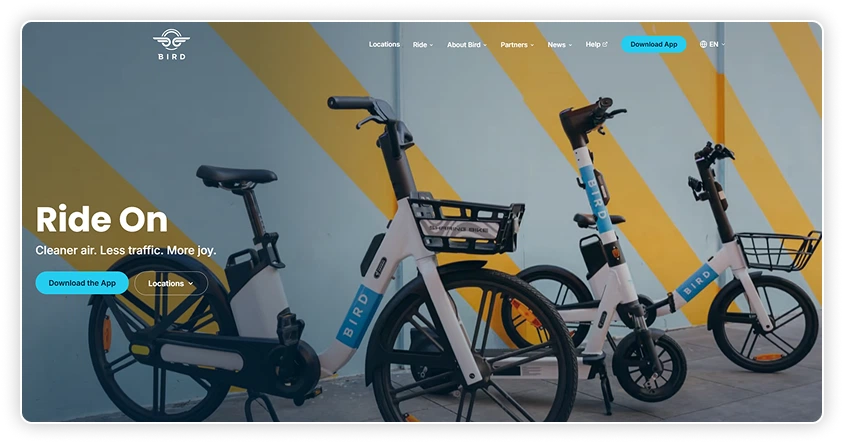
Bird was one of the first dockless e-scooter companies and grew very quickly after 2017, then struggled financially. Bird filed for Chapter 11 bankruptcy in December 2023 and emerged in April 2024 as part of Third Lane Mobility, a private company that also owns Spin.
The restructured business reported about 35 million rides and its first positive adjusted EBITDA of $19.2 million in 2024. In January 2026, Third Lane Mobility raised $20 million to add about 35,000 vehicles. Bird no longer designs its own scooters; it now buys vehicles mainly from Segway-Ninebot. In 2025 Bird restarted operations in German cities including Munich and joined the Freenow app in Italy, Spain and France.
5. Spin
- Founded: 2016
- Headquarters: Owned by Third Lane Mobility
- Key markets: North America
- Services: E-scooters and e-bikes
- Business model: Unlock fee plus per-minute rate
- App/platform: Spin app; Spin vehicles also appear in the Lyft app in some US cities
- Current status: Operating under Third Lane Mobility
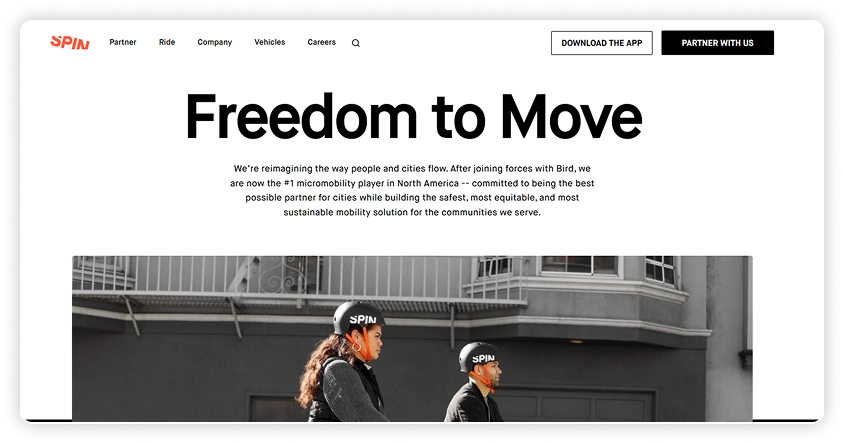
Spin has changed owners several times. Ford bought Spin in 2018 and sold it to TIER in 2022. TIER then sold Spin to Bird in September 2023 for $19 million. At that time Spin had 60,000+ vehicles in 50+ North American cities. Spin kept its own brand and app after Bird's restructuring and now runs alongside Bird under Third Lane Mobility.
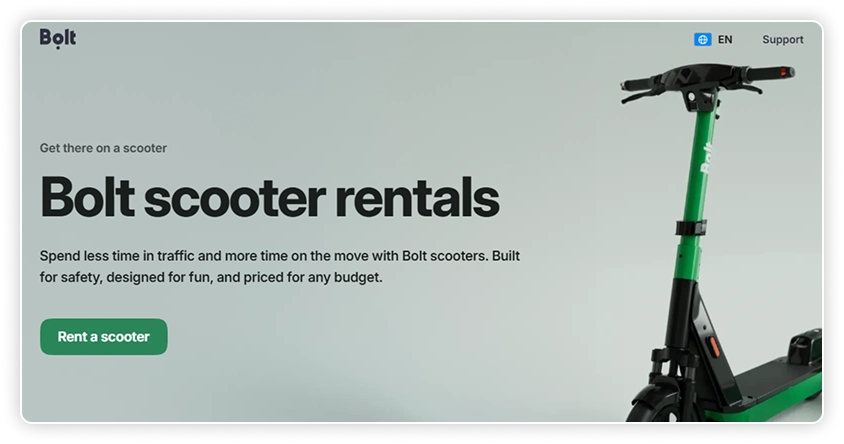
6. Bolt
- Founded: 2013 (as Taxify)
- Headquarters: Tallinn, Estonia
- Key markets: Europe, with recent launches in Washington (US) and Almaty (Kazakhstan)
- Services: E-scooters and e-bikes, inside a super-app that also offers ride-hailing, food delivery and car-sharing
- Business model: Pay-per-minute (from EUR 0.15 per minute in some cities), unlimited-unlock plans and minute passes
- App/platform: Bolt app
- Current status: Operating
Bolt is different from Lime or Voi because scooters are one service inside a larger mobility app. That gives Bolt a large existing customer base. Bolt's micromobility trips grew 8% in 2025, and its rental unit (scooters, bikes and car-sharing) passed 105 million rides. In 2025 Bolt launched e-bikes in London, its first UK micromobility service. Two city decisions affect Bolt directly: Prague banned shared e-scooters from January 2026, and Brussels will ban them from January 2027.
7. Veo

- Founded: 2017
- Headquarters: Santa Monica, California, USA
- Key markets: 50+ US cities, from Los Angeles to New York City, plus many university campuses
- Services: Stand-up scooters (Astro), seated scooters (Cosmo), e-bikes, a two-seater and cargo bike (Apollo) and an e-trike (Rover)
- Business model: Unlock fee plus per-minute rate
- App/platform: Veo app
- Current status: Operating; privately held
Veo is a US-focused operator that started at Purdue University in 2017 and still has a strong campus presence. Veo says it has been profitable company-wide since spring 2020 (a company claim; Veo does not publish audited results). Veo is one of three licensed operators in New York City's scooter program, alongside Lime and Bird. In July 2026 it launched a shared electric trike aimed at riders who want more stability.
8. Neuron Mobility (now including Beam)

- Founded: Neuron in 2016; Beam in 2018
- Headquarters: Singapore (Neuron Mobility Holdings)
- Key markets: Neuron in Australia, New Zealand and the UK; Beam in South Korea, Southeast Asia and Turkey
- Services: E-scooters and e-bikes
- Business model: Pay-per-minute with passes
- App/platform: Neuron and Beam apps (both brands kept)
- Current status: Operating; merged in September 2025
Neuron Mobility and Beam Mobility completed their merger in September 2025, creating Neuron Mobility Holdings, the leading e-scooter operator in Asia-Pacific. The combined company runs about 100,000 e-scooters across about 100 cities and keeps each brand in its strongest markets. In 2026, Neuron sold its Canadian operations to Lime.
Companies Like Lime: Major Electric Scooter-Sharing Alternatives
The main alternatives to Lime are Dott, Voi, Bird, Spin, Bolt, Veo and Neuron/Beam. Which one fits you depends mostly on where you live, because most cities license only one to three operators.
| Alternative | Best known in | Vehicles | How it differs from Lime |
|---|---|---|---|
| Dott | Western Europe, Middle East | E-scooters, e-bikes | More cities in Europe than Lime; no US presence |
| Voi | Nordics, UK, Germany | E-scooters, e-bikes | Europe only; focuses on long-lasting vehicles (8-year life claim) |
| Bird | US, Canada, parts of Europe | E-scooters, e-bikes, seated scooters | Available in the Lyft app instead of the Uber app |
| Spin | US | E-scooters, e-bikes | Sister brand to Bird; North America only |
| Bolt | Europe | E-scooters, e-bikes | Scooters sit inside a super-app with taxis and food delivery |
| Veo | US cities and campuses | Scooters, seated scooters, e-bikes, e-trikes | Widest vehicle range; strong on university campuses |
| Neuron / Beam | Australia, NZ, South Korea, Southeast Asia | E-scooters, e-bikes | Strongest in Asia-Pacific; built-in helmets on many Neuron scooters |
Can you use Lime through another app? Yes. Lime rides can be booked inside the Uber app at the same price as the Lime app. Bird scooters can be booked inside the Lyft app in more than 25 US cities.
Former, Acquired or Discontinued Scooter-Sharing Companies
Several companies that were famous in 2018-2023 no longer operate as independent scooter brands. Knowing what happened to them explains a lot about how this market works.
| Company | What happened | When |
|---|---|---|
| TIER Mobility | Merged with Dott; all vehicles moved to the Dott brand | 2024 |
| Beam Mobility | Merged with Neuron Mobility; Beam brand kept in its markets | September 2025 |
| Superpedestrian (LINK) | Shut down US operations; 20,000+ scooters auctioned | December 2023 |
| Lyft (own dockless scooters) | Left dockless scooters to focus on docked bike-share; now offers Bird/Spin scooters in its app | 2024 |
| Scoot | Acquired by Bird; San Francisco ordered it to stop operating | Acquired 2019; stopped 2021 |
| Skip | Filed for Chapter 7 liquidation after Helbiz took over its US scooter operations | 2021 |
| Wind Mobility | Sold its markets separately (Italy to TIER, UK to Superpedestrian, Israel to Yandex); German company in liquidation | 2021-2025 |
| Circ | Acquired by Bird | January 2020 |
| Jump | Uber transferred Jump bikes and scooters to Lime | May 2020 |
| GOAT | Launched in Austin in 2018, later expanded through local franchise operators; no public updates since 2022 | Status unclear |
| Ofo | Chinese bike-sharing company (bikes, not scooters) that collapsed under debt and refund claims | 2018-2020 |
Scoot
Scoot, founded in San Francisco in 2011, was one of the first app-based electric vehicle rental services. Bird bought Scoot's assets in 2019, and San Francisco ordered Scoot to stop operating there by July 2021.
Skip
Skip was a San Francisco dockless scooter startup. Helbiz took over Skip's US scooter operations in December 2020, and Skip filed for Chapter 7 liquidation in August 2021.
Wind Mobility
Berlin-based Wind Mobility was founded in 2017 and competed with Bird and Lime in Europe. Instead of closing all at once, Wind sold its markets one by one: Italy to TIER and the UK to Superpedestrian in 2021, and Israel to Yandex. The German company has been in liquidation since January 2025.
Ofo
Ofo was a Beijing-based dockless bike-sharing company founded in 2014. It was never a scooter operator, but it is an important lesson for the industry. After very fast growth, Ofo collapsed under debt, and by December 2018 about 12 million users were waiting for deposit refunds.
What Has Changed in Electric Scooter Sharing Since 2023?
The biggest change since 2023 is that the scooter-sharing industry has consolidated and moved from growth at any cost to profitability. Fewer companies now run larger, longer-lasting fleets under stricter city rules.
Companies and ownership
- Bird filed for bankruptcy in December 2023 and became part of Third Lane Mobility in April 2024.
- Spin was sold by TIER to Bird in September 2023.
- TIER and Dott merged in 2024 and now run under the Dott brand.
- Neuron and Beam merged in September 2025.
- Superpedestrian shut down US operations at the end of 2023.
- Lyft stopped running its own dockless scooters in 2024.
- Lime filed for an IPO in May 2026 and began trading on Nasdaq in July 2026.
Business models
- Profitability comes first. Lime, Dott, Voi and Third Lane Mobility all now report positive adjusted EBITDA. In 2023 most operators were still losing money on every measure.
- Subscriptions are growing. Passes and subscriptions made up about 28% of Lime's revenue in 2025, up from 20% the year before. In Seattle, LimePrime costs $6 a month and charges a flat $2.85 for rides of 5-20 minutes.
- Distribution through super-apps. Lime is sold through Uber, Bird through Lyft and Freenow, and Bolt scooters sit inside the Bolt app.
Fleet technology
- Vehicles last much longer. In 2018, early shared scooters lasted only 1-2 months. Lime now says its Gen4 scooter lasts about 5 years, and Voi claims an 8-year vehicle lifespan.
- Swappable batteries let field teams replace batteries on the street instead of collecting every scooter for charging.
- Seated scooters and e-bikes are growing. Lime's LimeGlider and Veo's Cosmo target riders who don't want to stand.
- AI and computer vision are coming to scooters. Lime Vision detects sidewalk riding, and end-of-ride parking photos are now standard in many cities.
Regulation and city policy
| City / country | Change | Date |
|---|---|---|
| Paris | Rental e-scooters removed after a referendum (89% against) | September 2023 |
| Madrid | Scooter-sharing licences for Lime, Dott and TIER revoked | October 2024 |
| Melbourne | Lime and Neuron e-scooter scheme ended | September 2024 |
| Prague | Shared e-scooters banned; shared e-bikes still allowed | January 2026 |
| Brussels | Shared e-scooters to be banned | From January 2027 |
| United Kingdom | Rental e-scooter trials extended again | Until May 2028 |
| Germany | New rules give cities more control over scooter parking; turn signals required on new scooters from 2027 | Approved December 2025 |
| Queensland, Australia | Solo riders must be 16+ with at least a learner licence | From 31 August 2026 |
Sources: Paris, Madrid, Melbourne, Prague, Brussels, UK, Germany, Queensland.
More cities now pick a small number of operators through tenders instead of letting any company drop scooters on the street. For operators, that means winning a city contract matters more than launching fast.
Electric Scooter Sharing Market in 2026: Key Numbers
Shared e-scooters are still growing where cities allow them, even as some cities remove them. Here are the most recent reliable figures:
- North America: NABSA counted 85 million shared e-scooter trips in 2024, part of 225 million shared micromobility trips. There were 333,000 shared vehicles across 415 cities.
- US cities: In NACTO member cities, shared e-scooter trips rose 29% to 58 million in 2025. Each scooter averaged 2.9 trips per day.
- Chicago: Riders took a record 6.1 million Lime scooter trips in 2025.
- Europe: Fluctuo recorded a record 312 million e-scooter trips in 2025, even though e-scooter fleets shrank 7%. In other words, fewer scooters are doing more trips each.
- Global forecast: Statista's Mobility Market Insights model projects worldwide e-scooter sharing revenue of about US$2.0 billion in 2025, growing to about US$2.5 billion by 2029. This is a forecast, not reported revenue.
How Does Electric Scooter Sharing Work?
Electric scooter sharing lets you locate, unlock and pay for a shared e-scooter through a mobile app. GPS shows where each scooter is, an IoT module in the scooter unlocks it and tracks the ride, and geofencing controls where you can ride and park.
Here is the full rider journey:
- Download the app. Install the operator's app (for example Lime, Dott, Voi or Bird), or use a partner app such as Uber or Lyft where available.
- Create an account. Sign up with a phone number or email, accept the rider terms and confirm your age. Some regions now also require a driving licence check.
- Add a payment method. Link a card or digital wallet, or buy a pass or subscription.
- Find a nearby scooter. The map shows available scooters, their battery level and any no-ride or slow zones.
- Scan the QR code. Scan the code on the handlebar (or enter the scooter's ID) to unlock it.
- Start the ride. The app starts the timer, and the scooter's IoT module reports its location in real time.
- Follow riding and parking rules. Ride in bike lanes where required, stay out of no-ride zones and follow speed limits that the geofence may apply automatically.
- End the ride. Park in an allowed area, often a marked parking zone, and end the trip in the app. Many cities require a photo of the parked scooter.
- Pay. The app charges the unlock fee and per-minute cost, or deducts minutes from your pass.
- Get your receipt. You receive a ride summary with the route, time, distance and cost.
How Much Does It Cost to Rent an Electric Scooter?
Most electric scooter rentals charge a small unlock fee (usually about $1, EUR 1 or GBP 1) plus a per-minute rate. Per-minute rates run from about $0.30 to $0.55 in US cities and about EUR 0.15 to EUR 0.55 in Europe. At pay-as-you-go rates, a 15-minute ride usually costs about $5 to $10 in US cities.
| Operator | Example pay-as-you-go price | Passes / subscriptions |
|---|---|---|
| Lime | San Francisco: $1 unlock + $0.55/min, plus local fees | LimePass minute bundles; LimePrime (Seattle: $6/month, flat $2.85 for 5-20 minute rides) |
| Bird | Lafayette: $1 unlock + $0.39/min | Ride passes; Community Plan for reduced fares |
| Dott | About EUR 0.17-0.55/min; some cities have no unlock fee | Minute Passes (30, 100 or 300 minutes) |
| Voi | Southampton, UK: GBP 0.99 unlock + GBP 0.20/min | Voi Pass (day, week or month) removes the unlock fee |
| Bolt | From EUR 0.15/min | Unlimited-unlock plan from EUR 0.99/month; minute passes |
Why prices vary: each city sets its own permit fees, and operators change prices by city, time of day and demand. Frequent riders nearly always save money with a pass or subscription. Many operators also offer reduced-fare programs for low-income riders, students or seniors.
How Do Electric Scooter Rental Companies Make Money?
Electric scooter rental companies make most of their money from ride fees (unlock fee plus per-minute charges) and a growing share from passes and subscriptions. The best operators keep each scooter busy for several rides a day and make it last for years.
Revenue streams
- Unlock fees: A fixed charge at the start of each ride.
- Per-minute pricing: The main revenue source for pay-as-you-go riders.
- Hourly and daily rentals: Flat-price day passes for tourists and longer trips.
- Subscriptions and memberships: Monthly plans such as LimePrime or Bird's monthly passes that trade a fixed fee for cheaper rides.
- Prepaid minute bundles: For example LimePass, Dott Minute Passes and Bolt minute passes.
- Partner app distribution: Rides booked through Uber, Lyft or Freenow bring in new riders (the platform typically takes a share).
- Corporate and campus partnerships: Employee mobility programs, university contracts and exclusive city contracts.
- Advertising and sponsorship: Branded vehicles or sponsored city programs, where the local rules allow it.
Major operating costs
- Fleet: Buying scooters and e-bikes. According to Micromobility Industries' analysis of Lime's IPO filing, Lime's fully landed cost is about $1,300 per vehicle, with a payback period of about 12 months.
- Charging: Swapping batteries or collecting scooters to charge them. This was the largest cost per ride in early scooter models.
- Maintenance and repairs: Brakes, tires, damaged parts and vandalism.
- Insurance: Rider and third-party liability cover, now required by law in more countries (for example Spain from January 2026).
- Operations staff: Field teams, warehouse staff and customer support.
- Fleet redistribution: Moving scooters to where demand is (called rebalancing).
- Software: Rider app, fleet management, IoT connectivity and payments.
- Regulatory costs: Permit fees, per-ride city fees, data-sharing requirements and parking infrastructure.
The key metric is utilization: how many rides each scooter completes per day. In NACTO cities, shared scooters averaged 2.9 trips per scooter per day in 2025. Every extra daily ride goes almost straight to profit, because the scooter, permit and software costs stay the same.
How to Start an Electric Scooter Rental Business
Starting an electric scooter rental business means combining a licensed fleet, a rider app and a fleet management system in a city that allows shared scooters. Here are the steps, in order:
- Choose your target market. Big cities with existing operators are hard to enter. Smaller cities, university campuses, tourist areas, resorts and business parks are often easier and less crowded.
- Research local regulations. Check whether shared e-scooters are allowed, whether the city runs a tender, the fleet caps, speed limits, parking rules, insurance rules and data-sharing requirements. This step decides everything else.
- Select your fleet. Choose stand-up scooters, seated scooters, e-bikes or a mix. Compare durability, swappable batteries, IoT compatibility and warranty. Most operators now buy from manufacturers such as Segway-Ninebot or Okai instead of designing their own vehicles.
- Choose your business model. Options include public dockless sharing, station-based rental, B2B rental for hotels and campuses, delivery-rider rentals or a franchise model.
- Set your pricing. Decide on unlock fees, per-minute rates, passes, subscriptions and reduced-fare programs. Test the numbers against your expected rides per scooter per day.
- Build your digital platform. You need a rider app, an admin panel and fleet management tools. You can build custom software or start with a ready-made white-label platform.
- Integrate GPS and IoT. Connect each scooter's IoT module for remote locking, real-time location, battery data and geofencing.
- Launch a pilot. Start with a small fleet in a defined zone and work closely with the city on parking and safety.
- Monitor fleet utilization. Track rides per vehicle per day, battery swaps, repair rates and parking complaints.
- Scale operations. Add vehicles, zones or new cities once the unit economics work.
Technology Behind Electric Scooter Rental Apps
An electric scooter rental app connects three parts: the rider app, the IoT hardware in each scooter and the operator's admin and fleet management system.
- GPS tracking: Shows each scooter's live location to riders and to the operations team.
- Geofencing: Virtual boundaries that set no-ride zones, slow zones and parking zones. The scooter can slow down or refuse to end a ride automatically.
- QR codes: A code on each scooter links it to the app for quick unlocking.
- IoT modules: A connected device in the scooter that handles remote lock and unlock, battery status, speed limits and alarms.
- Real-time scooter tracking: Live map updates for riders and field teams, including theft alerts.
- Digital payments: Cards, wallets, passes, subscriptions and automatic fare calculation.
- Maps and navigation: Scooter discovery, parking spots and route guidance.
- Push notifications: Ride reminders, low-battery warnings, promotions and parking alerts.
- Ride tracking: Trip history, receipts and dispute handling.
- Fleet management: Battery levels, charging and swap tasks, and rebalancing jobs for field teams.
- Maintenance management: Fault reports from riders and sensors, repair tickets and vehicle status.
- Admin dashboard: Rider management, pricing controls, zone setup and support tools.
- Analytics: Rides per vehicle, revenue by zone, peak hours and city reporting (many cities require data sharing).
How Much Does It Cost to Build an Electric Scooter Rental App?
The cost to build an electric scooter rental app depends on how much of the platform you build from scratch and how many integrations you need. The main cost factors are:
- Customer app: The rider app for iOS and Android, including sign-up, map, unlock, ride and payment flows.
- Admin panel: Rider, vehicle, pricing, zone and reporting controls.
- Fleet management: Tools for charging, battery swaps, rebalancing and field team tasks.
- GPS and maps: Map provider costs and real-time location features.
- IoT integration: Connecting your chosen scooter's IoT module for lock, unlock and telemetry. Each hardware brand needs its own integration.
- Geofencing: Drawing and enforcing ride, slow and parking zones.
- Payment gateway: Card and wallet payments, passes, subscriptions and refunds.
- Backend: Servers, databases and APIs that keep rides and payments in sync.
- UI/UX design: Custom design versus a ready-made template.
- Third-party integrations: SMS, email, identity or licence checks, analytics and city data-reporting feeds.
- Platform selection: Android only, iOS only, or both.
- Customization: Your own branding, extra vehicle types, multi-city or multi-language support.
- Maintenance and support: Updates, bug fixes, hosting and new OS versions after launch.
A fully custom build gives you the most control but takes the longest. A ready-made white-label platform already includes the rider app, admin panel and core scooter features, so you can launch a pilot faster and spend more of your budget on vehicles and city permits.
White Label Fox offers a ready-made e-scooter rental app platform with a customer app, admin panel, GPS mapping, QR-code unlocking, smart lock integration, battery tracking and revenue analytics. It can be branded and customized for your city, fleet and pricing model. To get a quote based on your features and platforms, talk to our team.
Final Thoughts
The electric scooter sharing market in 2026 is smaller in number of companies, but stronger. Lime, Dott, Voi, Bird, Spin, Bolt, Veo and Neuron/Beam now compete on reliability, city partnerships and profitability rather than on who can put out the most scooters fastest.
For riders, that means better vehicles and more subscription options. For entrepreneurs, the lesson from Bird, Superpedestrian and Ofo is clear: win the city's approval first, keep your scooters busy, and use software that lets you track every vehicle and every ride.
If you are planning an electric scooter or bike rental business, White Label Fox can help you launch with a proven platform. Explore our e-scooter app solution, or see our guides on starting a ride-sharing service and on-demand app ideas.
Frequently Ask Questions

Viral Kacha - CEO & Sales Head
Author
With years of expertise in the on-demand app industry, Viral Kacha leads White Label Fox with a vision to empower startups and enterprises with top-tier, ready-made app solutions. His strategic approach, strong leadership, and deep market understanding drive business growth, innovation, and client success. He is dedicated to helping businesses scale efficiently with cutting-edge technology.