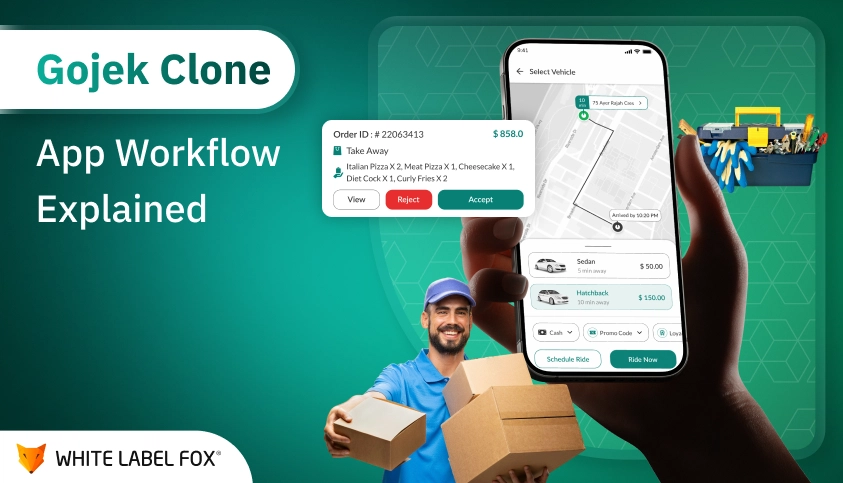
Introduction: Why the Gojek Model Is Dominating the On-Demand Economy
The on-demand economy is no longer about single-service apps. Customers today expect one app to handle everything - ride-hailing, food delivery, parcel services, home repairs, and even beauty appointments. That is exactly what a Gojek clone app delivers.
Originally launched in Indonesia, Gojek grew from a simple motorcycle taxi service into Southeast Asia's most powerful super-app, now valued at over $10 billion. The core genius behind its model? A single platform connecting users, service providers, and administrators - all operating simultaneously across dozens of verticals.
For entrepreneurs, building a Gojek clone app means launching a proven business model in their own geography without starting from scratch. But before investing, one critical question must be answered: How does it actually work?
This guide breaks down the complete user flow, service provider flow, and admin flow - with keyword-rich clarity and technical depth - so you can make an informed decision.
What Is a Gojek Clone App?
A Gojek clone app is a white-label, multi-service on-demand platform modelled after the original Gojek super-app. It replicates the core architecture - multiple service verticals, real-time tracking, in-app payments, and a centralized admin panel - while allowing full customization of branding, services, and geography.
Unlike single-service apps (like a taxi app or food delivery app alone), a Gojek-like super app bundles 101+ services into one ecosystem. Users don't need to switch apps. Providers earn from multiple service categories. And the platform owner collects commissions across every transaction.
Common services included in a Gojek clone script:
- Ride-hailing (bike & car)
- Food & grocery delivery
- Parcel & courier delivery
- Home services (cleaning, plumbing, electrician)
- Beauty & wellness (salon, spa)
- Medicine & pharmacy delivery
- Tow truck & roadside assistance
- Handyman services
Single-Service vs Multi-Service App
| Feature | Single-Service App | Gojek Clone App |
|---|---|---|
| Services | One (e.g., taxi only) | Multiple services |
| Revenue Streams | Limited | Multiple income channels |
| User Retention | Medium | High |
| Scalability | Limited | High |
A multi-service platform increases user engagement, retention, and revenue diversification.
Launch Your Gojek Clone App in Just 5 Days
Skip months of development and go live with a fully white-labeled, scalable multi-service app. Start building your on-demand business with a proven solution designed for fast growth and higher ROI.
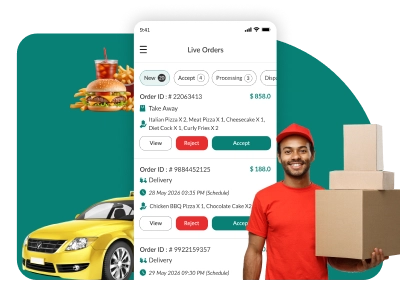
How a Gojek Clone App Works: The 4-Panel Architecture
1. Customer App (User Panel)
- Service browsing
- Booking functionality
- Real-time tracking
- Payment integration
2. Service Provider App (Driver/Partner Panel)
- Accept/reject requests
- Earnings tracking
- Availability toggle
3. Admin Panel (Control Center)
- Business management
- Revenue tracking
- User monitoring
4. Dispatcher Panel (Optional but Powerful)
- Manual booking support
- Real-time service allocation
Each panel operates independently but communicates in real-time through a unified backend. Here is the full flow for each.
Part 1: The Full Customer App Flow (Customer Journey)
Step 1: Registration & Profile Setup
The customer journey begins with a frictionless onboarding process. Users download the app (iOS or Android), then register via:
- Mobile number + OTP verification
- Email/password
- Google or Facebook sign-in (social login)
Once registered, users complete their profile, add delivery addresses, and optionally link a payment method. This single registration unlocks access to all services within the super-app - no separate logins required.
Step 2: Selecting a Service Category
The home screen of a well-built multi-service app like Gojek displays all available service categories through an icon grid. Users tap the service they need - whether it's booking a ride, ordering food, or scheduling a handyman visit.
This multi-service dashboard is the heart of the super-app model. Studies show that users who engage with 3+ services on a single platform have a 70% higher lifetime value compared to single-service app users.
Step 3: Booking & Real-Time Tracking
Depending on the service selected, the booking flow adapts:
- Ride-hailing: User enters pickup and drop location → fare estimate appears → confirms booking → nearest driver is auto-assigned
- Food delivery: User browses restaurant listings → adds items to cart → selects delivery address → places order
- Home services: User selects service type → picks a time slot → confirms booking with a professional
Once booked, the user sees real-time GPS tracking of the service provider on a live map. Push notifications keep the user updated at every stage - provider accepted, en route, arrived, completed.
Step 4: Payment
A Gojek clone app supports multiple payment options:
- In-app digital wallet (most important for super-app retention)
- Credit/debit cards
- Cash on delivery
- UPI / local payment gateways (market-specific)
The digital wallet inside the app creates a closed-loop payment ecosystem. Users top up their wallet and spend across services. This dramatically increases repeat usage and reduces payment friction. It is one of the most powerful monetization levers in the Gojek clone app development model.
Step 5: Rating & Review
After service completion, users rate the provider (1–5 stars) and leave a review. This rating data feeds directly into the algorithm that prioritizes which providers appear first - incentivizing quality performance across the network.
Part 2: The Full Service Provider Flow (Driver/Professional Journey)
Step 1: Provider Registration & Document Verification
Service providers - drivers, delivery partners, plumbers, beauticians - register through a dedicated provider app. The onboarding flow includes:
- Personal information submission
- Upload of required documents (ID, license, certifications)
- Background check integration (optional, region-specific)
The admin panel reviews and approves provider profiles before they can go live. This manual verification step is critical for trust and platform quality.
Step 2: Going Online & Receiving Requests
Once approved, providers toggle their status to "Online" in their app. The platform's matching algorithm immediately begins considering them for nearby service requests.
When a booking comes in, the provider sees:
- Service type and user details
- Distance to pickup location
- Estimated earnings for the job
- Accept / Decline button (with a countdown timer)
If the provider declines or doesn't respond, the request automatically routes to the next nearest available provider.
Step 3: Fulfilling the Service
For ride and delivery services, the provider follows GPS-guided navigation. For home services, they arrive at the scheduled time with job details visible in the app.
Providers can use in-app chat or call (masked number) to coordinate with the customer - without exposing private phone numbers.
Step 4: Earnings & Payouts
After service completion, provider earnings are automatically calculated (fare minus platform commission). Earnings accumulate in a provider wallet inside the app.
Payouts are disbursed on a daily, weekly, or on-demand basis depending on the platform's configuration - set entirely within the admin panel.
Providers can also see detailed earning reports, trip history, and performance ratings from within their app.
Part 3: The Full Admin Flow (Platform Owner Control Center)
This is where the true power of a Gojek clone script lies. The admin panel gives the platform owner complete command over every aspect of the business.
Dashboard Overview
The admin dashboard provides a real-time snapshot of:
- Total bookings (today / week / month)
- Active users and providers on the map
- Revenue generated and commissions earned
- Pending provider verifications
- Service-wise performance breakdown
User & Provider Management
Admins can view, search, filter, and manage all registered users and providers. Key capabilities include:
- Approve/reject provider registrations
- Block or suspend accounts for violations
- View complete booking history for any user or provider
- Send push notifications to targeted segments
Service & Category Management
One of the most powerful features of a Gojek clone app development platform is how easily the admin can add, remove, or configure services. No coding required - it's all managed through a UI:
- Add new service categories (e.g., pet grooming, car wash)
- Set pricing models (fixed, per km, per hour, surge pricing)
- Define service availability zones on a map
- Configure surge pricing rules
Commission & Revenue Management
The admin sets commission percentages per service category. For example:
| Service | Platform Commission |
|---|---|
| Ride-hailing | 20% per ride |
| Food Delivery | 15% per order |
| Home Services | 25% per booking |
All commissions are automatically deducted and tracked in real time.
Promo Code & Offers Management
Admins create and manage discount codes, referral bonuses, and first-time user offers - all without developer intervention. This is a key growth lever for early-stage platform adoption.
Reports & Analytics
The admin panel generates detailed business intelligence reports including:
- Revenue by service category
- Top-performing providers
- User acquisition trends
- Booking completion vs. cancellation rates
- Geographic heat maps of demand
Key Technical Features That Power a Gojek Clone App
For a multi-service app like Gojek to work seamlessly, several technical components must be built into the core architecture:
Real-time GPS Tracking - Powered by Google Maps SDK or similar mapping APIs for live provider tracking.
Smart Matching Algorithm - Assigns the nearest available, highest-rated provider to every incoming request.
Push Notification Engine - Keeps users and providers informed at every step via Firebase or similar services.
In-App Chat & Masked Calling - Enables communication without exposing private contact information.
Multi-Currency & Multi-Language Support - Essential for platforms operating across regions.
Scalable Cloud Backend - AWS, Google Cloud, or Azure infrastructure ensures the platform handles thousands of simultaneous bookings.
Monetization: How the Platform Owner Makes Money
A Gojek clone app generates revenue through multiple streams simultaneously:
| Revenue Model | Description |
|---|---|
| Commission per transaction | The primary revenue model |
| Surge pricing | Higher fares during peak demand |
| Featured listings | Restaurants or service providers pay for premium placement |
| In-app advertising | Contextual ads for relevant local businesses |
| Subscription plans | Provider premium memberships for priority request routing |
| Wallet transaction fees | Small fees on wallet top-ups or transfers |
This multi-revenue model is why the Gojek super-app model is so attractive for investors and entrepreneurs.
Gojek Clone App vs. Building From Scratch: The Real Difference
| Factor | Gojek Clone App | Build From Scratch |
|---|---|---|
| Time to Launch | 5 Days | 8–18 months |
| Cost | $5,000–$30,000 | $150,000–$500,000+ |
| Risk | Low (proven model) | High (unproven) |
| Customization | High (white-label) | Full (but costly) |
| Scalability | Built-in | Must be engineered |
| Support | Vendor-backed | In-house team required |
For most entrepreneurs entering a regional market, a Gojek clone script is the strategically superior starting point.
Industries That Can Benefit from a Gojek Clone App
Transportation
Launch a scalable ride-booking platform that connects users with drivers in real time. A gojek clone app enables taxi, bike, and carpool services with dynamic pricing and route optimization.
Food Delivery
Build a centralized food ordering platform connecting restaurants and customers. With real-time tracking and seamless payments, businesses can boost order volume and customer retention.
Grocery Delivery
Offer instant or scheduled grocery delivery services with a hyperlocal approach. This model ensures faster deliveries, higher order frequency, and strong user engagement.
Logistics
Streamline parcel delivery and courier services with real-time tracking and route optimization. Businesses can manage bulk deliveries efficiently while reducing operational costs.
Home Services
Enable users to book services like plumbing, cleaning, or repairs on demand. A multi-service platform helps service providers get consistent leads while improving user convenience.
Future of Super Apps: What to Expect Beyond 2026
AI-Driven Personalization
Super apps will leverage AI to analyze user behavior and deliver personalized service recommendations. This improves engagement, increases conversions, and enhances overall user experience.
Hyperlocal Service Expansion
Future platforms will focus more on hyperlocal markets, offering faster and more relevant services. This approach helps businesses dominate specific regions with better service availability.
Digital Payment Growth
With the rise of cashless economies, super apps will integrate advanced payment solutions like wallets, BNPL, and cross-border transactions to simplify user payments.
Automation in Operations
Automation will play a key role in reducing manual intervention across bookings, dispatching, and support. This leads to faster service delivery and improved operational efficiency.
Conclusion: Is a Gojek Clone App the Right Move for Your Business?
The answer for most regional entrepreneurs is a clear yes. The Gojek clone app model removes the single biggest risk of app-based businesses - uncertainty around product-market fit. You're deploying a model that has already proven itself across hundreds of millions of users.
What you bring is local execution: the right market, the right pricing, the right service mix, and the right partnerships with local providers.
Understanding the full user, provider, and admin flow - as laid out in this guide - is the first step to building a business, not just an app. Every screen, every touchpoint, every dollar earned is the result of this carefully orchestrated three-panel ecosystem.
The on-demand super-app economy is still in its early stages across most of Africa, the Middle East, Latin America, and South/Southeast Asia. The window to establish a dominant regional super-app is open - but it won't stay open forever.
Ready to Launch Your Own Gojek-Like Super App?
Don't spend 18 months and $500,000 building what already exists.
Our fully customizable multi-service app is fully white-label and ready to launch in market, source-code included, and can be deployed in your market within weeks. Trusted by 500+ entrepreneurs in 88+ countries.
- ✅ 70+ services built-in
- ✅ iOS + Android + Web Admin Panel
- ✅ Full Source code ownership - no monthly fees
- ✅ Free technical support for 12 months
- ✅ Custom branding included
👉 Get a Free Multi-Service Live App Demo Today - See the full platform in action before you decide.
👉 Talk to a Launch Consultant - Get a personalized roadmap for your market in 30 minutes.
Frequently Ask Questions

Deep Faldu - CTO
Author
As the Chief Technology Officer, Deep Faldu spearheads innovation at White Label Fox, ensuring seamless, scalable, and high-performance app solutions. His technical expertise, problem-solving skills, and commitment to excellence help businesses thrive in the competitive digital landscape. He continuously explores new technologies to enhance product efficiency and user experience.