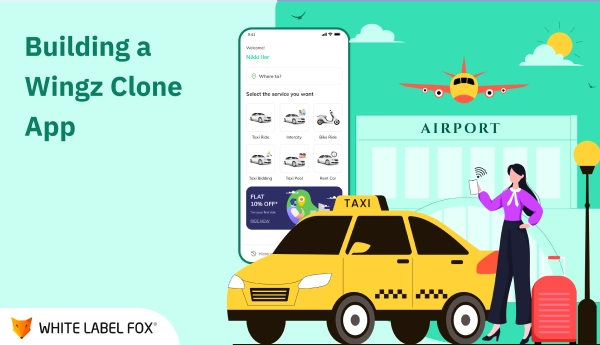
Why build every feature from scratch when you can start with a customizable solution? Launch your own taxi booking platform with rider and driver apps, booking management, payment options, and a centralized admin dashboard. Our taxi app solution in South Africa helps you launch under your own brand, simplify operations, and build a business ready to grow.

White Label Fox helps businesses launch their own taxi booking platforms fast 5 lunch without developing every component from scratch. Our customizable taxi app booking solution in South Africa gives you a practical foundation to establish your brand and manage everyday operations.
Our team focuses on building flexible digital solutions that align with your business goals, brand identity, and operational needs. We help businesses choose the right approach, customize their platforms, and establish a strong foundation for long-term growth in the South African market.
Our solution supports essential taxi operations, including ride requests, driver coordination, fare management, and trip monitoring. These tools help your team organize daily activities and deliver a smoother booking experience.
Whether you're starting a new venture or expanding an existing transport service, we provide technical guidance to help you prepare your platform for changing customer expectations and future business opportunities.
Every number here is earned, not claimed. For 9+ years, we've delivered white label solutions for startups and enterprises across 88 countries and every client owns their source code outright.
Offer riders flexible booking choices with instant rides, fare negotiation, shared trips, bike taxis, and hourly travel.
Allow riders to book nearby drivers quickly and manage ride requests through your branded platform.
Let riders and drivers negotiate fares through flexible bidding options that support mutually agreed ride prices.
Enable passengers to schedule city-to-city journeys with configurable fares, pickup locations, and convenient travel arrangements.
Connect passengers traveling along similar routes to share rides and reduce individual transportation expenses.
Offer two-wheeler bookings for short-distance travel, helping passengers navigate busy urban areas more efficiently.
Allow customers to hire cars with drivers for hourly trips, business meetings, shopping, and errands.
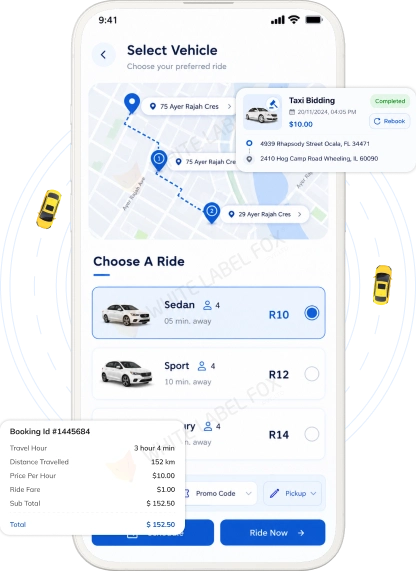
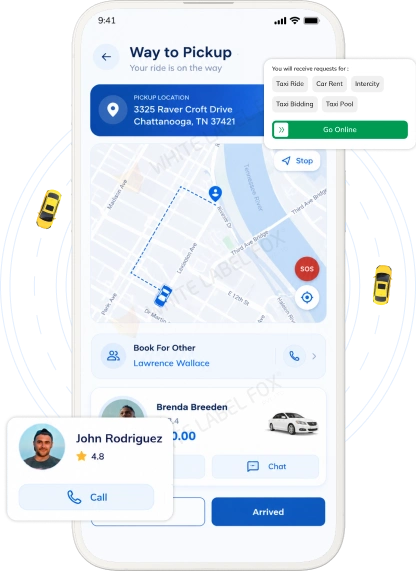
Connect customers and drivers through intuitive apps built for easy bookings, real-time tracking, payments, navigation, and communication.
Book a ride by entering pickup and destination details in a few taps.
Track the assigned driver's location and estimated arrival time.
View estimated trip costs before confirming a booking.
Schedule taxi pickups in advance for planned journeys.
Choose from the payment methods supported by your platform.
Review previous trips, booking details, and fare records.
Let passengers rate their trips and share feedback about drivers.
Give passengers a way to raise ride-related questions and concerns.
Submit driver details and required documents for account verification.
Receive notifications about new ride requests and trip details.
Get route guidance to passenger pickup points and destinations.
Switch availability on or off to manage when you receive ride requests.
Review completed-trip earnings and available income summaries.
View assigned rides and update trip status throughout each journey.
Access upcoming bookings and review pickup times and locations.
Contact passengers about pickup points and ride-related updates.
Equip your ride-hailing platform with optional intelligent tools that support daily operations and passenger engagement.
Handle common passenger questions automatically and provide multilingual assistance.
Analyze demand patterns and traffic data to support dynamic fare recommendations.
Identify suitable routes using traffic conditions, trip distance, and estimated journey times.
Recommend available drivers based on proximity, availability, and booking requirements.
Allow passengers to request information and access selected booking functions using voice commands.
Highlight busy locations and peak periods to help drivers plan their working hours.
Send or initiate pre-trip confirmations to help passengers and drivers prepare for scheduled rides.
Identify unusual system activity and potential performance issues for further investigation.
Whether you're launching a new ride-hailing startup or expanding an existing fleet, get a customizable taxi app solution designed to support your business model.
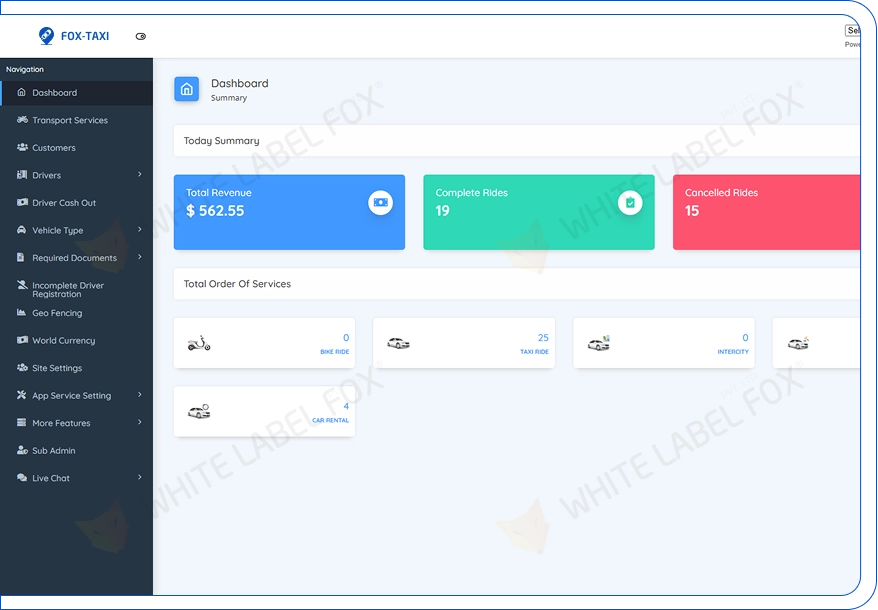
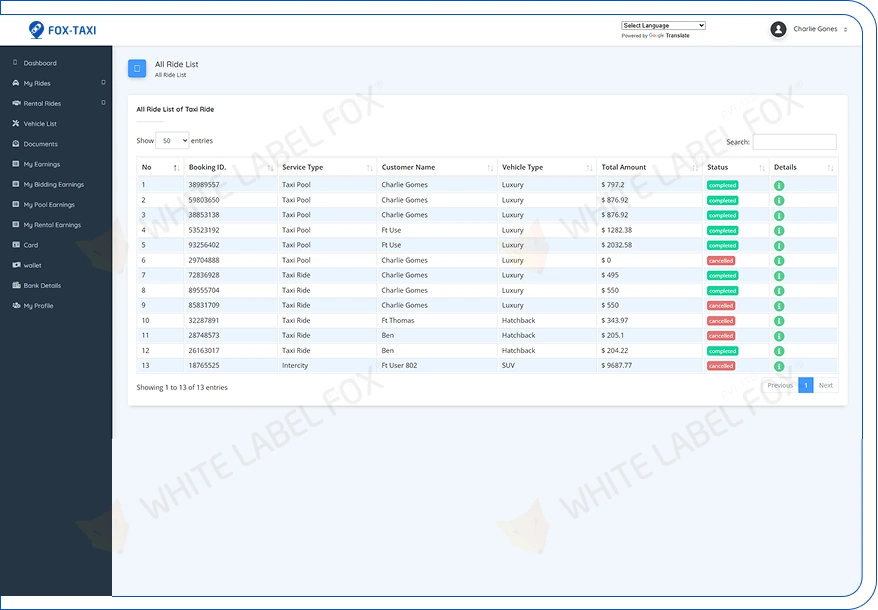
Use the super admin dashboard to manage your taxi platform and the driver web panel to access trip details, documents, earnings, and account information.
Manage your taxi platform efficiently with dedicated customer and driver apps, powerful admin dashboards, dispatcher tools, and a branded landing website.
Customer Android App
Customer iOS App
Driver Android App
Driver iOS App
Admin Dashboard
Account Admin Dashboard
Dispatcher Admin Dashboard
Static Landing Website
Launch your ride-hailing business with a customizable white-label taxi app, scalable technology, integrations, and ongoing support.
Build your branded taxi platform through configuration, testing & deployment.
Connect payment gateways, maps, SMS providers, and third-party services.
Support growing bookings, drivers & service areas with scalable infrastructure.
Protect project details and business plans with signed non-disclosure agreements.
Configure languages and currencies for diverse customer groups & markets.
Simplify booking, navigation, and trip management for passengers and drivers.
Customize your taxi app with your logo, brand colors, and unique visual identity.
Leverage experience across 88+ countries to meet local market needs.
Choosing the wrong development partner doesn't just cost money it costs months of rebuilding, rebranding, and recovery. Here's how we stack up against every alternative, point by point, nothing hidden.
Create a branded taxi booking platform tailored to your market, services, customers, and operational needs, with the flexibility to support your business as it grows.
Get Your White-Label AppCombine flexible monetization options to create sustainable income and grow your taxi business.
Collect a configurable commission from every successful booking on your platform.
Adjust fares based on demand, availability, location, and peak travel periods.
Offer paid access plans that create predictable recurring platform revenue.
Apply fair cancellation and no-show fees to protect platform earnings.
Serve corporate clients with centralized billing and recurring transportation payments.
Serve corporate clients with centralized billing and recurring ride payments.
Hear from businesses that have worked with White Label Fox to build, customise, and launch their digital products. Their experiences offer a closer look at our collaboration, communication and delivery approach.
Take a look at real applications we’ve delivered to clients across different industries. Each project highlights practical solutions, custom features, and how businesses are running their operations using our platforms.
We are proud to be recognized by top industry platforms such as Trustpilot, Google, Clutch, and GoodFirms. With excellent ratings and reviews, our commitment to delivering high-quality, clone app development solutions is trusted by businesses and users worldwide.
Two packages, two clear paths. Starter gets you a fast, minimum-viable launch to validate your
market.
Enterprise gives you full source code and everything needed to scale from day one.
| No | Service Included | Starter Package | Enterprise Package |
|---|---|---|---|
| 1 | Post-Launch Bug Support | 3 Months | 12 Months |
| 2 | App Store Upload & Submission |
|
|
| 3 | Full Source Code Delivery |
|
|
| 4 | App Store Listing Graphics |
|
|
| 5 | Social Login (Google / Facebook / Apple) |
|
|
| 6 | App Language Support | English Only | Up to 10 Languages |
| 7 | Currency Support | Single Currency | Up to 10 Currencies |
We use modern, scalable, and secure technologies to develop high-performance mobile applications, web platforms, and backend systems. Our technology stack is carefully selected to ensure reliability, fast deployment, seamless integrations, and long-term scalability.
Google Maps
Laravel
CSS
MySQL
Flutter
PHP
Firebase
Bootstrap
100 MS
HTML
AWS
Dart
Get answers about taxi apps, admin controls, pricing, customization, integrations, source code, and launching your platform in South Africa.
Start by choosing your target market, such as local commuters, airport passengers, or corporate clients. Define your operating model, arrange the required permits and insurance, recruit drivers, and choose a taxi booking platform that supports your business needs.
Yes. You can launch a taxi booking platform for a specific city, town, or service area before expanding into other regions. Starting locally helps you understand passenger demand, build a reliable driver network, and manage operations with fewer resources.
Focus on a specific customer group, reliable pickups, transparent fares, and strong local driver relationships. You can also differentiate your service through airport transfers, business accounts, scheduled rides, or better support for passengers in underserved areas.
The right model depends on your target customers, driver network, and operating costs. You could operate a fleet-owned service, connect independent drivers with passengers, serve corporate clients, or combine multiple models to diversify your income.
Yes. You can build a marketplace that connects passengers with independent drivers or existing fleet operators. Your business would coordinate bookings, payments, commissions, and customer support while participating drivers provide the vehicles and transportation services.
You could target daily commuters, tourists, airport travellers, university students, corporate employees, or customers needing scheduled transport. Researching demand in your chosen area will help you select a suitable audience and build services around its travel needs.
Review the applicable passenger transport licensing requirements, vehicle permits, driver documentation, insurance, and relevant business obligations. Requirements may differ by service type and location, so confirm the rules with the appropriate transport authority or a qualified local adviser before operating.
Your budget should account for software, driver recruitment, marketing, customer support, payment processing, insurance-related obligations, and daily operations. The amount depends on whether you own vehicles, operate a marketplace, or partner with existing fleets.
Use driver activity reports to review acceptance rates, cancellations, response times, and completed trips. You can establish clear service policies, investigate recurring issues, and improve driver allocation practices without relying only on manual supervision.
A well-planned platform can support complaint records, trip histories, fare details, and communication logs. These records help your support team investigate disputed charges, missed pickups, cancellations, and other service issues before deciding on an appropriate resolution.
Define operating zones according to your business coverage and driver availability. Area-based management can help you monitor demand, allocate drivers, set applicable fare rules, and identify locations where additional vehicles or promotional campaigns may be needed.
Yes, if the selected solution supports the required payment methods and integrations. You can offer cash and compatible digital options, while maintaining booking and payment records to help reconcile driver collections, platform commissions, and outstanding amounts.
You can configure booking rules to notify passengers, search for eligible drivers within a suitable area, or offer alternative pickup times when supported. Monitoring unavailable requests also helps you identify service gaps and decide where to recruit more drivers.
Yes. Your operations team can review support requests alongside trip status and booking history. A defined process for urgent safety concerns, fare disputes, and general complaints helps staff prioritize issues while keeping active ride operations organized.
Review booking volumes, pickup locations, completed trips, cancelled requests, and busy periods. These insights can help you identify demand patterns, improve driver availability, and choose locations for local promotions or future service expansion.
Depending on the platform's reporting capabilities, you can review trip earnings, commissions, cash collections, and payment records. Regular reconciliation helps identify discrepancies and gives drivers and administrators a clearer view of the amounts earned and owed.
Yes. You can configure a platform around airport pickups, scheduled journeys, corporate bookings, and other transport services supported by your chosen solution. Your booking rules, pricing structure, and operational processes should reflect the needs of each customer group.
A suitable taxi platform may support fixed-route fares alongside distance-based or time-based pricing. This can be useful for airport transfers, hotel journeys, and regular business routes, provided the pricing options are supported and configured for your operating model.
You can plan different ride categories if the selected platform supports them. Each service may require its own pricing, passenger capacity, booking rules, and driver allocation settings, so confirm these requirements before choosing your solution.
Yes, if the software supports location-based configurations. Separate operating zones may use different fares, service hours, vehicle categories, and driver requirements, helping you adapt the platform as your business enters additional South African markets.
Potential integrations may include accounting software, customer relationship management tools, payment services, mapping providers, and communication platforms. Availability depends on the software's API support and the third-party provider's requirements, so confirm compatibility before implementation.
Yes. You can design a service around employee commutes, scheduled pickups, approved business accounts, and company travel records if these workflows are supported. Corporate transport requirements should be defined early to ensure the booking and reporting processes suit business clients.
Depending on the solution, you may be able to include trip-sharing options, emergency contact details, driver verification workflows, and trip history access. Safety features should be combined with clear operating procedures and local legal compliance rather than treated as a software-only solution.
Potentially, yes. Supported messaging integrations can send booking confirmations, driver arrival updates, cancellations, and trip notifications. Availability, messaging costs, and setup requirements depend on the chosen provider and the platform's existing integration capabilities.
Consider distance, travel time, vehicle category, driver costs, fuel expenses, local competition, and passenger expectations. Your fares should remain attractive to customers while leaving enough revenue to cover business expenses and maintain a sustainable operating margin.
Provide dependable booking opportunities, clear payment records, fair commission rules, and responsive support. You can also review driver feedback and demand patterns to identify why drivers become inactive and improve the operating experience where possible.
Focus on local search visibility, referral campaigns, partnerships with hotels or businesses, and targeted promotions in your service area. Track the cost of each campaign against completed bookings and repeat usage instead of measuring success through app downloads alone.
Introductory discounts can encourage first-time bookings, but they should have a defined budget and purpose. Track whether promoted customers return at regular fares, and avoid discounts that attract demand without generating enough revenue to support your operating costs.
Corporate accounts can generate repeat bookings through employee transport, client transfers, and scheduled business travel. Clear billing arrangements, reliable service, and agreed booking procedures can help build longer-term relationships, although contracts and payment terms should be evaluated carefully.
Include marketing, customer support, hosting, payment processing, software maintenance, driver incentives, insurance-related expenses, and any vehicle or operational costs your business carries. Tracking these expenses helps you understand whether booking revenue is translating into actual profit.
Focus on reliable pickups, transparent fares, easy booking, timely updates, and effective complaint resolution. Loyalty rewards and referral offers may also help, but consistent service quality is essential for turning first-time users into repeat customers.
Consider expansion when your existing service has consistent demand, sufficient driver coverage, manageable support costs, and reliable operational processes. Evaluate the next city's transport requirements, competition, customer demand, and driver recruitment opportunities before committing additional resources.
Validate customer demand, driver availability, competitor pricing, operating costs, and the legal requirements for your planned service. Speaking with potential passengers and drivers can reveal practical challenges before you commit to a platform or launch campaign.
There is no universal number. Start with the expected booking volume, the size of your service area, operating hours, and the types of rides you plan to offer. A smaller, reliable driver network can be more useful than a large network with limited availability.
A limited launch can help you test booking workflows, driver response times, payment processes, and customer support before expanding. Choose an area where you can maintain dependable service and gather enough feedback to identify problems early.
Test the complete journey, including registration, ride requests, driver acceptance, GPS tracking, fare calculations, payment handling, cancellations, notifications, and support requests. Include different devices and realistic operating conditions so your team can address issues before a wider launch.
Yes, if the essential booking and operational workflows are ready and the remaining features are not necessary for safe, lawful service delivery. Prioritize the core experience, communicate any limitations clearly, and plan later improvements around real customer and driver feedback.
Common causes include incomplete business requirements, unavailable payment integrations, app-store review, unresolved software issues, missing driver documentation, and regulatory approvals. Preparing these dependencies early can reduce avoidable delays, although external approvals and review times cannot be guaranteed.
Provide clear onboarding instructions, explain booking and cancellation procedures, train staff to handle complaints, and establish processes for payment reconciliation and urgent incidents. Run practice bookings before launch so everyone understands their responsibilities and can resolve common problems.
Monitor completed bookings, repeat customers, driver acceptance, cancellations, passenger complaints, payment discrepancies, and acquisition costs. Use these results to prioritize improvements, adjust driver coverage, and refine your business strategy before increasing marketing spend or expanding to new areas.
Check out our best-selling on-demand solutions and find the perfect fit for your unique business needs.
WhatsApp
+91 79849 31943
Write to us
[email protected]
Stay updated with the latest trends, insights, and tips in the on-demand app industry. Explore our newest blogs to gain valuable knowledge and ideas to grow your business!
300+
StartupsPowered
100% Ownership
Enterprise
GradeProduct
NDA
Protection