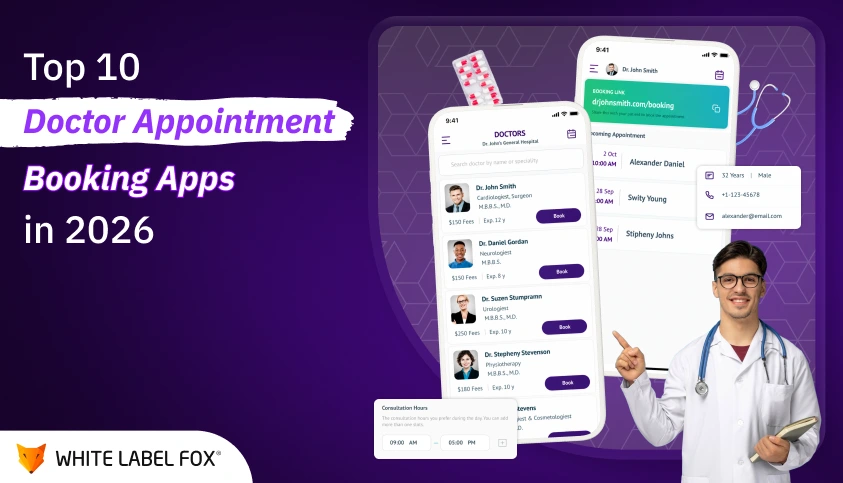
Finding a doctor, checking availability, and booking an appointment no longer needs a phone call or a visit to a clinic. Doctor appointment booking apps let patients search for doctors, compare profiles, select time slots, book consultations, and in many cases, connect through video or chat.
For businesses planning to enter this market, an Uber For Doctors App can provide a ready foundation for launching an online healthcare platform with patient, doctor, and admin-side features.
In this guide, we explore 10 well-known doctor appointment booking apps, what makes each platform useful, the features users expect, and what businesses can learn when planning their own healthcare app.
Key Takeaways
- Doctor booking apps simplify appointment scheduling.
- Many platforms support online and in-person consultations.
- Search and filters help patients find suitable doctors.
- Video, chat, prescriptions, and reminders extend app value.
- Doctor profiles and reviews help users make informed choices.
- Privacy and security are important for healthcare apps.
- Businesses can build platforms around appointments, telemedicine, or both.
Turn Your Healthcare Startup Idea Into a Live Platform
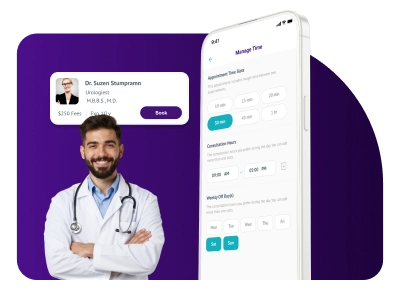
Launch your own doctor appointment booking solution with essential patient, doctor, booking, payment, and consultation features built around your business model.
Top 10 Doctor Appointment Booking Apps to Know
The following apps represent different approaches to digital healthcare. Some focus mainly on appointment discovery and booking, while others combine booking with online consultations, health records, medicines, or other services.
1. Practo
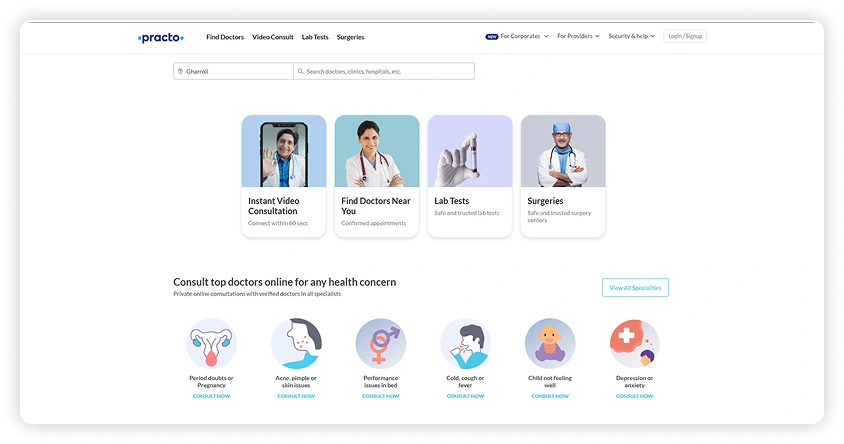
Practo is a widely used healthcare platform that combines doctor discovery, appointment booking, online consultations, medicine ordering, lab tests, and health records.
Patients can search for doctors by specialty, location, experience, fees, and availability. The platform also supports online consultations and digital prescriptions.
Practo's current platform highlights both instant online consultations and scheduled appointments with doctors.
Key features:
- Doctor search
- Online appointment booking
- Video consultations
- Digital prescriptions
- Medicine ordering
- Lab test booking
- Health records
- Doctor reviews
For businesses studying the doctor appointment booking model, Practo shows how appointment booking can be combined with additional healthcare services.
2. Zocdoc
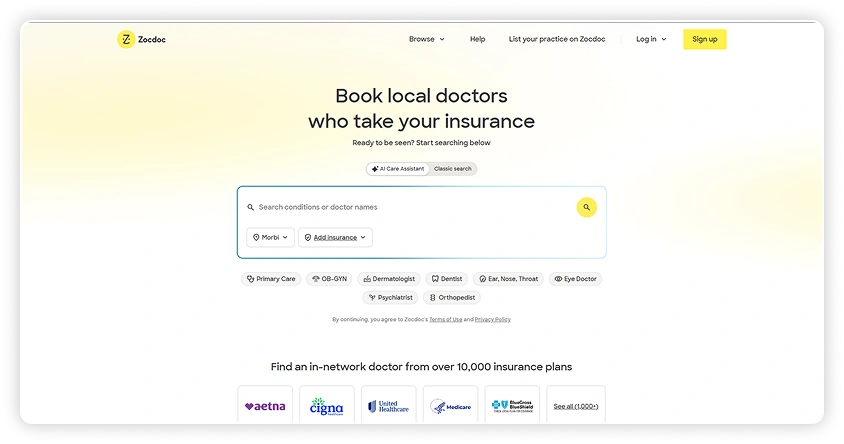
Zocdoc focuses on helping patients find and book local doctors. Users can search based on medical need, location, insurance, specialty, and provider availability.
The platform shows available appointment slots and allows patients to book online. It also provides doctor profiles and verified patient reviews.
Key features:
- Doctor search
- Insurance filters
- Real-time availability
- Online booking
- Provider profiles
- Patient reviews
- Appointment management
Zocdoc is a useful example for businesses that want to build a marketplace connecting patients with healthcare providers.
3. Teladoc
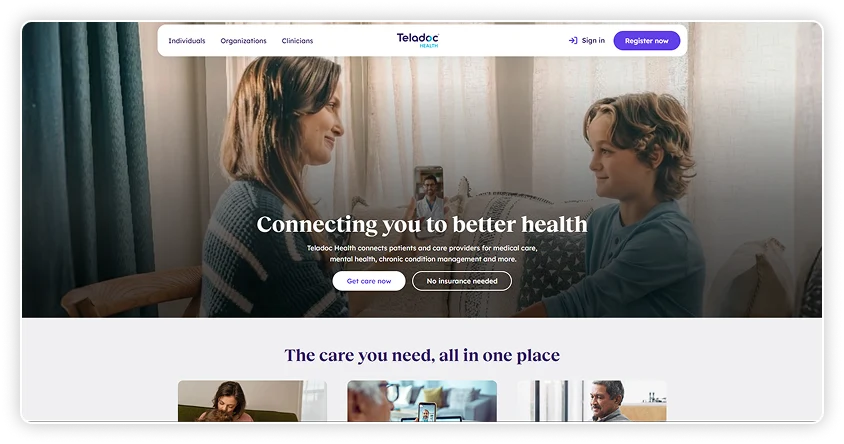
Teladoc is focused on virtual healthcare services. It connects patients with healthcare professionals through digital channels and supports remote care.
Its model shows how a doctor appointment platform can move beyond simple scheduling by offering virtual consultations as part of the patient journey.
Key features:
- Virtual doctor visits
- Online healthcare access
- Appointment scheduling
- Mobile access
- Digital communication
- Remote care services
For a telemedicine-focused business, this type of model can support consultations without requiring every interaction to happen inside a physical clinic.
4. Amwell
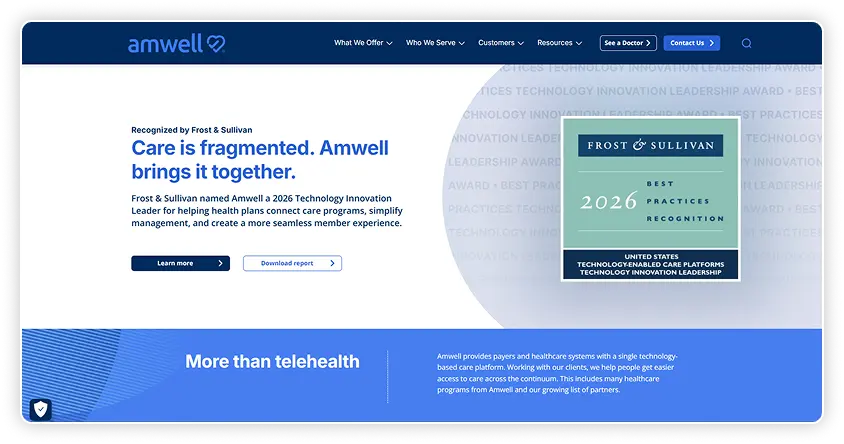
Amwell is a telehealth platform that supports virtual care and connects patients with healthcare providers through digital technology.
Its platform approach demonstrates how online healthcare can support different types of care while connecting patients, providers, and healthcare organizations.
Key features:
- Virtual consultations
- Video-based care
- Provider access
- Patient communication
- Healthcare organization support
- Digital care delivery
Businesses developing an online doctor consultation platform can study this model to understand how appointments and virtual care can work together.
5. Doctor On Demand
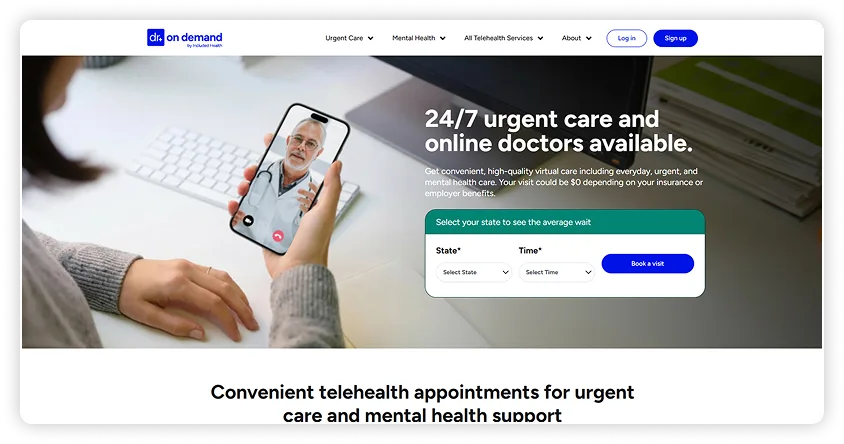
Doctor On Demand became known for providing virtual healthcare through online consultations. Its model focuses on connecting patients with healthcare professionals without requiring an in-person visit for every type of consultation.
The platform also shows the importance of making the consultation process simple across mobile and web interfaces.
Key features:
- Virtual consultations
- Doctor access
- Video visits
- Online scheduling
- Mental healthcare access
- Mobile and web support
A similar platform can be designed around specific specialties, a particular region, or a broader healthcare marketplace.
6. MDLive
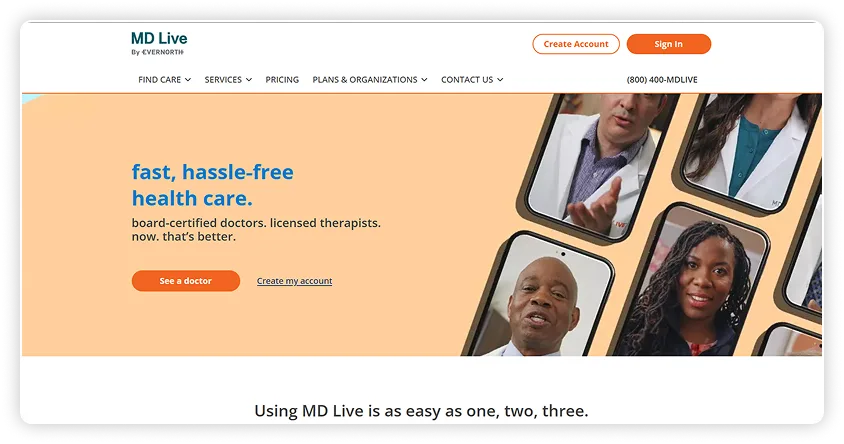
MDLive is another telehealth-focused platform that has offered virtual medical and behavioral health services.
The model highlights how online healthcare platforms can give patients digital access to healthcare professionals while supporting different consultation types.
Key features:
- Virtual consultations
- Doctor selection
- Appointment scheduling
- Behavioral healthcare
- Mobile access
- Online patient services
Businesses can use this type of model when planning a doctor appointment booking system that includes remote consultation.
7. Halodoc
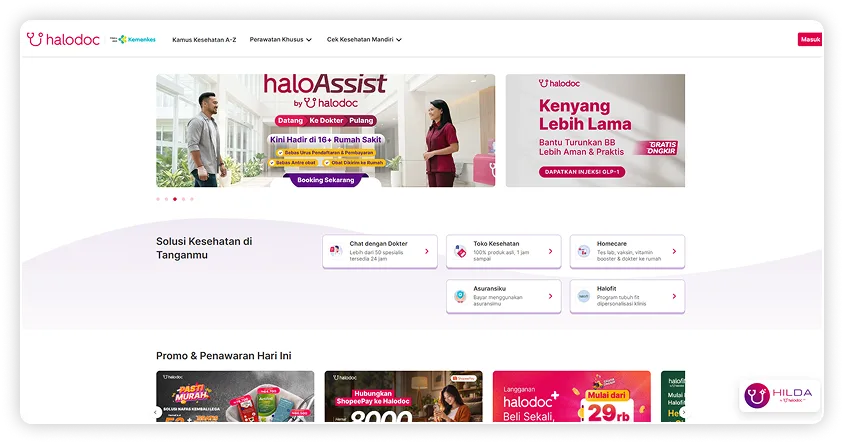
Halodoc is a digital healthcare platform based in Indonesia. Its ecosystem connects patients with doctors and other healthcare services.
The platform is an example of how a doctor appointment app can become part of a wider healthcare marketplace instead of operating only as a booking tool.
Key features:
- Doctor consultation
- Chat-based healthcare
- Voice and video consultation
- Prescriptions
- Medicine services
- Healthcare provider access
This approach can be useful for businesses that want to combine doctor consultations with pharmacy, laboratory, or other healthcare services.
8. Lybrate
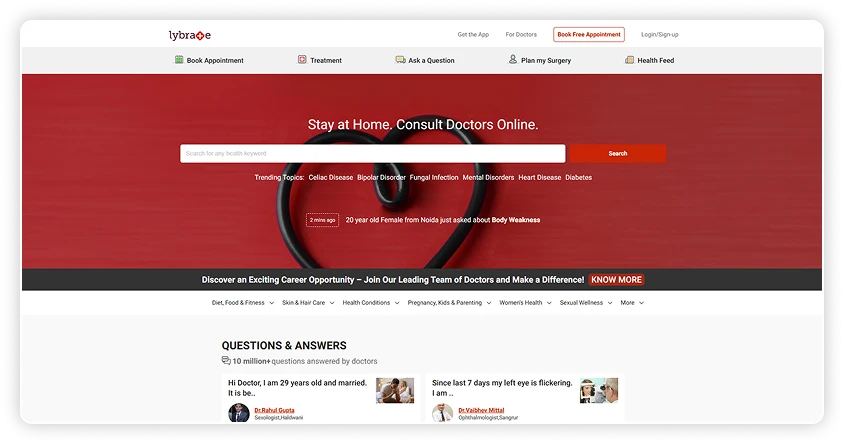
Lybrate is an online healthcare platform that connects patients with doctors. It has focused on online consultation and doctor-patient communication.
A platform like Lybrate shows how healthcare apps can create value for both sides of the marketplace. Patients get easier access to doctors, while healthcare professionals gain another channel to connect with patients.
Key features:
- Doctor discovery
- Online consultation
- Patient-doctor communication
- Appointment management
- Doctor profiles
- Notifications
9. MFine
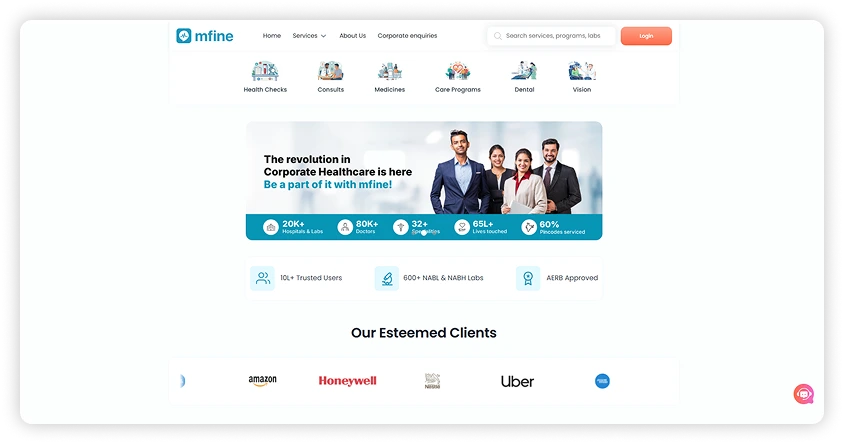
MFine has operated as a digital healthcare platform offering online doctor consultations and other healthcare services.
Its model combines doctor access with digital communication, making it relevant to businesses researching online doctor appointment booking software.
Key features:
- Online consultations
- Doctor discovery
- Chat
- Audio and video consultation
- Healthcare services
- Digital access
A similar platform can be designed for a selected market, specialty, or group of healthcare providers.
10. Doctolib
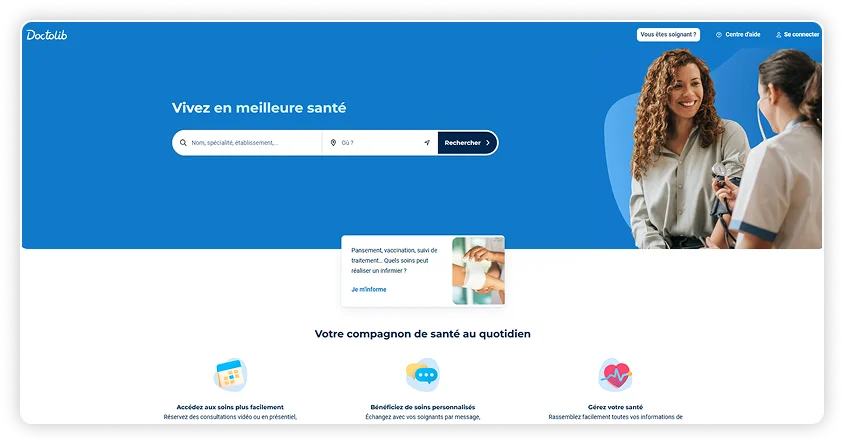
Doctolib is a healthcare booking platform used for finding healthcare professionals and managing appointments.
Its model demonstrates the value of making appointment scheduling easier for both patients and healthcare providers.
Key features:
- Healthcare professional search
- Appointment booking
- Schedule management
- Patient communication
- Online services
- Appointment reminders
For a business building a healthcare marketplace, appointment management is just as important as the patient-facing search experience.
Doctor Appointment Booking App Features Businesses Should Consider
The best doctor appointment booking system does more than show a list of doctors. They reduce friction throughout the booking and consultation process.
Here are some important Doctor Appointment App Features to consider when planning your own platform.
Patient App Features
- Easy registration
- Doctor search
- Specialty filters
- Location-based search
- Doctor profiles
- Availability calendar
- Appointment booking
- Appointment cancellation
- Rescheduling
- Online payments
- Video consultation
- Chat with doctors
- Digital prescriptions
- Medical records
- Push notifications
- Ratings and reviews
Doctor App Features
Doctors also need a simple way to manage their schedules and patients.
Important features include:
- Doctor registration
- Profile management
- Availability settings
- Appointment calendar
- Booking management
- Patient history
- Video consultation
- Chat
- Digital prescriptions
- Earnings tracking
- Payment management
- Notifications
Admin Panel Features
The admin panel gives the business control over the entire platform.
Common functions include:
- Doctor verification
- Patient management
- Appointment management
- Payment monitoring
- Commission management
- Reports and analytics
- Content management
- Review management
- Promotional tools
- Notification management
How Do Doctor Appointment Booking Apps Work?
A typical doctor appointment booking software follows a simple process:
- The patient creates an account.
- The patient searches for a doctor.
- Filters are used to narrow the results.
- The patient checks the doctor's profile.
- Available time slots are displayed.
- The patient selects a suitable slot.
- Payment is completed if required.
- The appointment is confirmed.
- The patient receives a reminder.
- The consultation takes place online or at the clinic.
This simple booking process benefits both patients and healthcare providers. Patients can schedule visits at their convenience, while doctors can organize appointments and manage their schedules more efficiently. Understanding the Importance of Online Booking Apps for Doctors can also help healthcare businesses see how digital scheduling can improve the overall appointment experience.
For example, Practo describes a booking flow where patients select a doctor, view available time slots, enter appointment details, and receive confirmation and reminders.
What Makes a Doctor Appointment App Easy to Use?
User experience can directly affect whether patients complete a booking.
A simple app should make it easy to:
- Find a doctor
- Check availability
- Compare basic information
- Book an appointment
- Pay securely
- Receive reminders
- Join an online consultation
- Manage future appointments
Avoid asking users for unnecessary information before they can see available doctors or appointment slots.
Security and Privacy in Doctor Appointment Apps
Healthcare apps handle sensitive information such as medical records, prescriptions, personal details, and consultation information. Security should therefore be part of the product design from the beginning.
For healthcare technology platforms, security should also cover identity verification, authentication, controlled access, and protection of patient information. NHS England's digital health standards provide guidance on identity verification and authentication for healthcare digital services.
Important areas include:
- Secure login
- Access controls
- Data encryption
- Secure payments
- Consent management
- Audit logs
- Secure video communication
- Regular security reviews
- Safe data storage
HHS HIPAA Security Rule guidance also recommends reviewing privacy and security risks, controlling access to patient information, and using secure communication and data-handling processes.
Businesses should also check the healthcare and data protection rules that apply to their target country and market before launching.
How to Develop a Doctor Appointment Booking App
If you want to build a doctor appointment booking software, start by defining the business model and target users.
Step 1: Choose Your Business Model
Decide whether the platform will focus on:
- Doctor appointment booking
- Online consultations
- Clinic management
- Healthcare marketplace
- Specialty-based consultations
- A wider healthcare ecosystem
Step 2: Define User Roles
Most platforms need three main sides:
- Patient
- Doctor
- Admin
Each user should have a clear workflow.
Step 3: Select the Core Features
Start with essential booking features before adding advanced functions.
For an MVP, consider:
- Registration
- Doctor profiles
- Search and filters
- Availability
- Appointment booking
- Payments
- Notifications
- Admin dashboard
You can later add video consultation, AI tools, health records, analytics, and other services.
Step 4: Choose the Development Approach
Businesses can develop the platform from scratch or use a ready-made solution.
A custom approach gives more control over the product but usually requires more planning and development work. A ready-made or white-label solution can help businesses launch sooner and customize the platform around their brand and market.
Step 5: Plan Compliance and Security
Before launch, identify the privacy, healthcare, payment, and data regulations that apply to your target market.
This is especially important when your platform stores medical information or supports remote consultations. WHO guidance on digital health interventions notes that telemedicine can complement face-to-face care but does not replace it entirely, and emphasizes maintaining the privacy of health information.
How Do Doctor Appointment Booking Software Make Money?
There are several ways a doctor booking platform can generate revenue.
Common monetization models
- Commission per appointment
- Doctor subscription plans
- Clinic subscription plans
- Featured doctor listings
- Advertising
- Premium patient services
- Online consultation fees
- Medicine or lab service commissions
A business can also combine multiple revenue streams depending on its market and user base.
Why Are Doctor Appointment Booking Systems Growing?
Patients increasingly expect simple digital access to services, including healthcare scheduling. Appointment apps reduce the need for phone calls and can make availability easier to view.
For businesses, the opportunity is not limited to appointment booking. A platform can expand into teleconsultation, digital prescriptions, medical records, pharmacy services, laboratory bookings, and clinic management.
The key is to solve a clear healthcare access problem instead of adding features without a clear purpose.
Conclusion
The top doctor appointment booking software shows that successful healthcare platforms can combine simple appointment scheduling with services such as online consultations, doctor discovery, payments, reminders, prescriptions, and health records.
Practo, Zocdoc, Teladoc, Amwell, Doctor On Demand, MDLive, Halodoc, Lybrate, MFine, and Doctolib each demonstrate different ways to organize digital healthcare services.
If you are planning to develop a doctor appointment booking software, start with the needs of your patients and doctors. Build a simple booking flow, provide useful doctor information, protect health data, and add advanced features as your platform grows.
Frequently Asked Questions

Viral Kacha - CEO & Sales Head
Author
With years of expertise in the on-demand app industry, Viral Kacha leads White Label Fox with a vision to empower startups and enterprises with top-tier, ready-made app solutions. His strategic approach, strong leadership, and deep market understanding drive business growth, innovation, and client success. He is dedicated to helping businesses scale efficiently with cutting-edge technology.