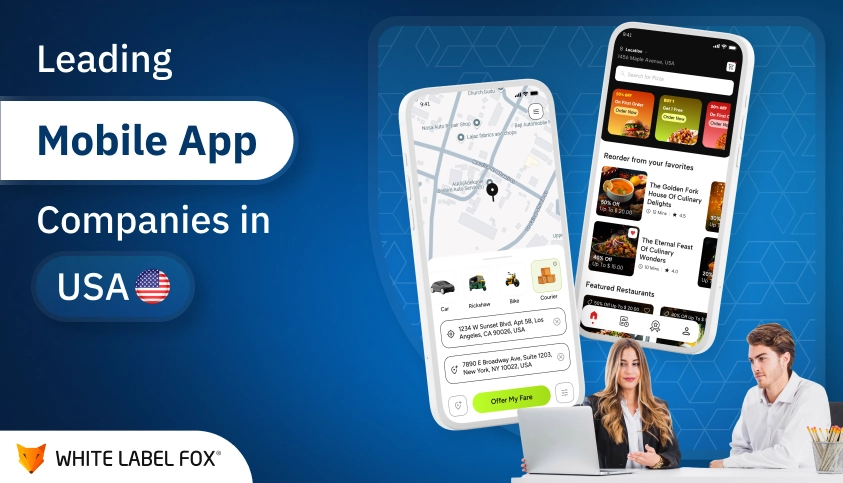
Choosing the right mobile app development company is a strategic decision for enterprises, CTOs, and digital leaders. A mobile application is no longer just a product feature; it is often the core delivery channel for customers, partners, and internal teams.
The United States has a mature and highly competitive mobile app development market. While many agencies claim technical expertise, only a limited number consistently deliver applications that are scalable, secure, and aligned with real business outcomes.
This article presents a carefully curated list of the top 10 mobile app development companies in the USA, selected based on market authority, verified reviews, enterprise delivery experience, and practical execution capability. The purpose is to help decision-makers shortlist the right development partner with clarity and confidence.
How We Selected the Top Mobile App Development Companies
This list is based on practical, enterprise-focused evaluation rather than promotional claims. Each company was assessed using criteria that matter during real-world project execution.
Key selection factors include:
- Verified and consistent reviews on platforms such as Clutch, GoodFirms, and G2
- Proven experience delivering scalable mobile applications
- Strong system architecture, performance, and security practices
- Ability to work with enterprise stakeholders and CTO-led teams
- Clear specialization instead of generic, one-size-fits-all services
Every company listed below addresses a specific business need. The best choice depends on how well that capability aligns with your goals.
1. White Label Fox – On-Demand & Clone App Development Specialist
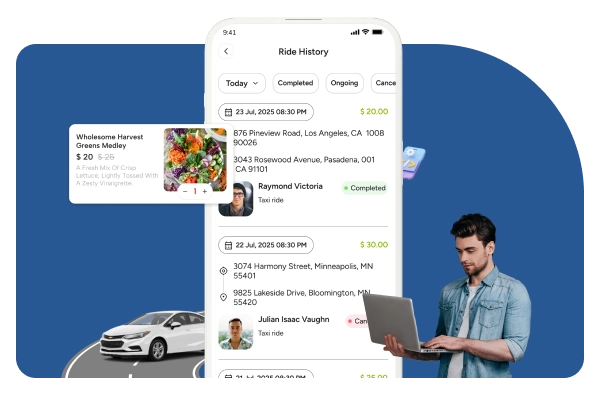
White Label Fox is a global mobile app development company founded in 2018, specializing in enterprise-ready on-demand and clone app platforms. The company is known for helping businesses launch production-ready applications in significantly shorter timelines than traditional development approaches.
Instead of building everything from scratch, White Label Fox follows a platform-first model. This allows enterprises to deploy tested systems, customize workflows, and scale efficiently without extended development cycles.
Core Strengths
- Expertise in on-demand and clone app platforms
- Faster go-live timelines, typically within 5–7 days
- Scalable microservices-based architecture
- Cloud-ready and DevOps-aligned deployments
- Industry-agnostic solutions suitable for all business verticals
Practical Enterprise Example
An enterprise planning to launch a multi-service delivery or marketplace platform across multiple US regions can start with a ready-tested system, apply custom branding, integrate APIs, and go live in days rather than months. This approach reduces technical risk while maintaining enterprise-grade performance.
White Label Fox is a strong fit for CTOs and enterprises that prioritize speed, predictability, and scalable architecture.
Ready to Build Your Mobile App the Right Way?
Choosing a mobile app development partner impacts your speed to market, scalability, and long-term technical success. Get expert guidance to evaluate the right architecture, development approach, and delivery timeline before you commit.
2. Fueled – Digital Product Development for Growth-Stage Companies
Fueled is a New York–based mobile app development company that focuses on building digital products for funded startups and growing enterprises. The company emphasizes product strategy, user experience, and engineering quality.
Core Strengths
- Strong UX and UI design capabilities
- Custom iOS and Android development
- Product discovery and strategy workshops
- Experience working with venture-backed businesses
Best Use Case
Fueled is well-suited for companies that want a design-led, fully custom mobile application and are prepared for a longer development timeline.
3. WillowTree – Enterprise-Scale Mobile Experiences
WillowTree is known for building enterprise-grade mobile applications for large organizations and high-traffic environments. The company works closely with internal teams and focuses on long-term platform stability.
Core Strengths
- Enterprise-scale mobile architecture
- Strong security and compliance practices
- Complex backend and system integrations
- Long-term product lifecycle support
Best Use Case
WillowTree is ideal for large enterprises with established digital roadmaps and strict governance requirements.
4. Intellectsoft – Digital Transformation and Mobile Engineering
Intellectsoft delivers mobile applications as part of broader digital transformation initiatives. The company focuses on integrating mobile solutions with cloud platforms and legacy systems.
Core Strengths
- Enterprise mobility solutions
- Cloud-native application development
- Legacy system modernization
- Consulting-driven delivery approach
Best Use Case
Intellectsoft is suitable for enterprises undergoing digital transformation where mobile applications are part of a larger modernization strategy.
5. Zco Corporation – Custom Mobile App Development
Zco Corporation is an established mobile app development firm offering fully custom-built applications across industries such as healthcare, finance, and entertainment.
Core Strengths
- Long-term experience in custom app development
- Advanced UI and animation capabilities
- AR, VR, and gaming solutions
- Dedicated development teams
Best Use Case
Zco Corporation is a good choice for organizations that require highly customized mobile applications with complex visual or functional requirements.
6. Appinventiv – Large-Scale Mobile Engineering Teams
Appinventiv works with enterprises and funded startups to deliver large-scale mobile platforms. The company is known for quickly deploying large engineering teams for complex projects.
Core Strengths
- High-capacity engineering resources
- End-to-end mobile app development
- Experience handling high-traffic platforms
- Structured delivery frameworks
Best Use Case
Appinventiv is suitable for businesses that need rapid team scaling and structured execution for complex mobile initiatives.
7. Savvy Apps – Design-Focused Mobile Development
Savvy Apps combines design thinking with mobile engineering. The company places strong emphasis on usability, accessibility, and user experience.
Core Strengths
- UX-driven mobile app development
- Design sprints and prototyping
- Native iOS and Android development
- Consumer-focused product expertise
Best Use Case
Savvy Apps is ideal for consumer-facing applications where user experience is a key differentiator.
8. Konstant Infosolutions – Cross-Platform Mobile Development
Konstant Infosolutions offers mobile app development services with a strong focus on cross-platform technologies and cost-efficient delivery.
Core Strengths
- React Native and Flutter development
- MVP and prototype builds
- Startup and SMB-friendly engagement models
- Broad technology stack
Best Use Case
This company is suitable for startups and smaller businesses looking to validate ideas quickly with controlled budgets.
9. Blue Label Labs – Product Strategy and Mobile Engineering
Blue Label Labs positions itself as a product development partner rather than a traditional development vendor. The company focuses on aligning technology decisions with business outcomes.
Core Strengths
- Product discovery and strategy workshops
- Custom mobile app development
- Collaborative delivery approach
- Experience with startups and enterprises
Best Use Case
Blue Label Labs works well for teams that need both strategic guidance and mobile development execution.
10. Cheesecake Labs – Agile Mobile Development Teams
Cheesecake Labs provides agile development teams for mobile and web platforms, focusing on continuous delivery and long-term product evolution.
Core Strengths
- Agile development methodology
- Dedicated CTO-led teams
- Mobile and web platform expertise
- Long-term support and iteration
Best Use Case
Cheesecake Labs is a strong option for organizations that prefer agile execution and ongoing platform improvement.
How to Choose the Right Mobile App Development Partner
Before finalizing a mobile app development company, enterprises should look beyond pricing and portfolios.
Important factors to evaluate include:
- Expected time-to-market
- Scalability and architectural maturity
- Security and compliance readiness
- Post-launch support and roadmap alignment
- Ability to collaborate with internal teams
For CTOs, the right partner is one that minimizes technical debt and operational risk while supporting long-term growth.
Conclusion & Next Steps
The mobile app development ecosystem in the USA offers a wide range of options, each with different strengths and delivery models. The best company for your business depends on your objectives, timeline, and technical complexity.
Enterprises that prioritize speed, predictability, and scalable platforms often benefit from platform-first or hybrid development approaches rather than fully custom builds.
Next step: Schedule a free consultation to evaluate technical feasibility, architecture fit, and delivery timelines before selecting a development partner.
Frequently Ask Questions
There is no single “best” company for every
business. The best mobile app development company depends on your
project goals, timeline, scalability needs, and budget. Enterprises
often prefer companies with proven architecture, security practices,
and predictable delivery models. Platform-first companies are ideal
for faster go-live, while custom agencies suit long-term, highly
tailored projects.
Mobile app development costs in the USA typically range from $25,000
to $250,000+, depending on:
- App complexity and features
- Technology stack
- Development approach (custom vs ready platform)
- Team size and engagement model
Platform-based or white-label solutions can significantly reduce
cost and development time compared to fully custom builds.
- App complexity and features
- Technology stack
- Development approach (custom vs ready platform)
- Team size and engagement model
Development timelines vary based on scope and
approach:
- Simple apps: 2–3 months
- Complex enterprise apps: 6–12 months
- Ready-to-launch or white-label platforms: as little as 5–7
days
Enterprises with strict timelines often choose platform-first
development to reduce delays and risk.
- Simple apps: 2–3 months
- Complex enterprise apps: 6–12 months
- Ready-to-launch or white-label platforms: as little as 5–7 days
Custom app development involves building
everything from scratch, offering full flexibility but longer
timelines and higher costs.
Clone or white-label apps are pre-built, production-tested platforms
that can be customized and branded quickly. They are ideal for
businesses that want faster market entry with lower technical risk.
Yes, many global companies successfully serve US clients.
Reliability depends on:
- Communication processes
- Project management standards
- Security and compliance practices
- Experience with US-based enterprises
Many companies operate globally while adhering to US business and
technical expectations.
- Communication processes
- Project management standards
- Security and compliance practices
- Experience with US-based enterprises
Leading mobile app development companies commonly use:
- Native technologies (Swift, Kotlin)
- Cross-platform frameworks (Flutter, React Native)
- Cloud platforms (AWS, Azure, Google Cloud)
- Microservices and API-driven architectures
Technology selection depends on scalability, performance, and
long-term maintenance needs.
- Native technologies (Swift, Kotlin)
- Cross-platform frameworks (Flutter, React Native)
- Cloud platforms (AWS, Azure, Google Cloud)
- Microservices and API-driven architectures
Most enterprise-focused mobile app development companies offer
post-launch services, including:
- Performance monitoring
- Security updates
- Feature enhancements
- Infrastructure scaling
Post-launch support is critical for maintaining app stability and
user experience as the platform grows.
- Performance monitoring
- Security updates
- Feature enhancements
- Infrastructure scaling
Yes, reputable mobile app development
companies follow security best practices such as:
- Secure API communication
- Data encryption
- Role-based access control
- Compliance with industry standards
Enterprises should always confirm security responsibilities during
the contract stage.
- Secure API communication
- Data encryption
- Role-based access control
- Compliance with industry standards
This depends on business priorities. If speed-to-market and
predictability are critical, platform-first or white-label solutions
are often the better choice. If the business requires unique
workflows or IP-heavy features, custom development may be more
suitable. Many enterprises now adopt a hybrid approach to balance
speed and flexibility.

Deep Faldu – CTO
Author
As the Chief Technology Officer, Deep Faldu spearheads innovation at White Label Fox, ensuring seamless, scalable, and high-performance app solutions. His technical expertise, problem-solving skills, and commitment to excellence help businesses thrive in the competitive digital landscape. He continuously explores new technologies to enhance product efficiency and user experience.